Every so often a collaboration comes along that sounds like a marketing meeting got out of hand, and then you look at the detail and realise someone actually meant it. Louis Vuitton building a car with Singer is exactly that. On paper it reads as a luxury logo bolted onto an expensive, reinvigorated Porsche. In practice it's a year of obsessive work from two companies who both think "close enough" is a personal insult.
For those who don't live in the classic-Porsche corner of the internet: Singer is the Californian outfit that takes a customer's own air-cooled 911 (it must be a 964), strips it bare and rebuilds it into something that looks like the platonic ideal of a 911 while being quietly better than it ever was from the factory. They don't call them restorations; they call them "reimaginings," which historically I'd never give a second glance, except I'm getting old and Porsche's are suddenly appealing, and in Singer's case the work genuinely earns the word. Louis Vuitton, meanwhile, has been in the travel business since 1854 and has never once put its name on a car alongside someone else's. This is the first time. That's the headline that matters, not the Monogram flowers stitched into the headrests.
It started with a clock
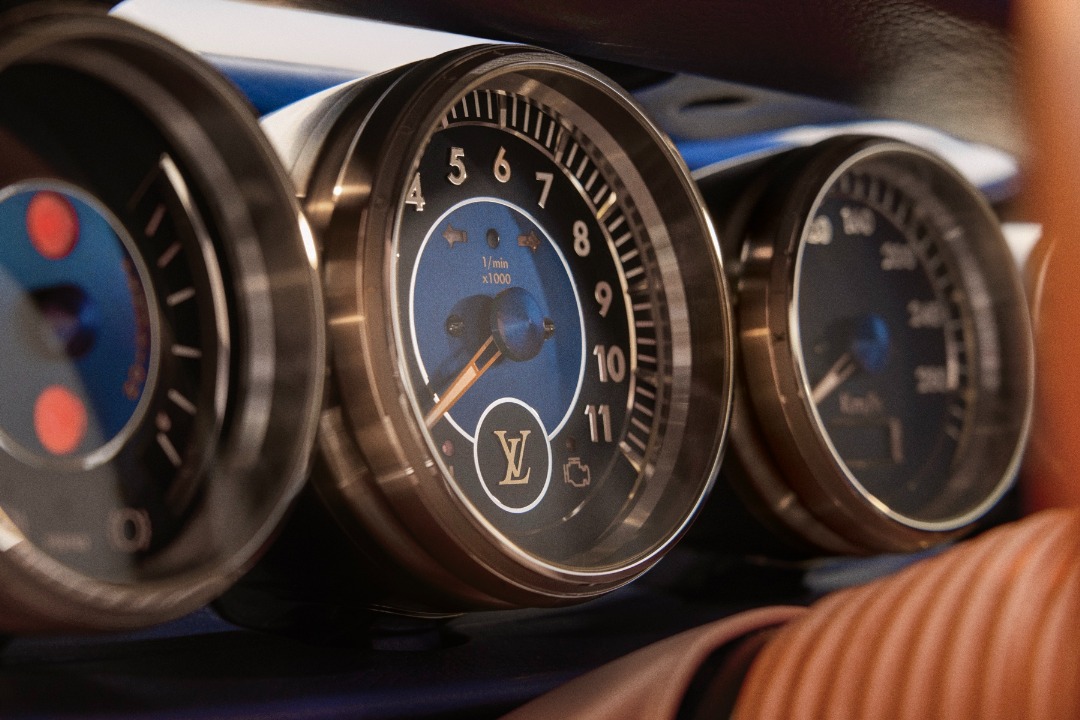
The origin story is almost too neat. Someone asked Louis Vuitton's watch workshop in Switzerland to make a dashboard clock for a car Singer was building. Fine. But once that clock went into the cockpit, the rest of the interior suddenly looked like it wasn't trying hard enough. So LV redesigned the instruments too: the speedometer, the rev counter, the gauges, dragging them into line with the graphic language of its Tambour watch. Cobalt blue dials, bright orange lettering. A year of work, apparently, on the dials alone. That's the tell with this whole project. It wasn't meant to be a co-branded car. It just kept refusing to stop.
Two cars, two very different moods
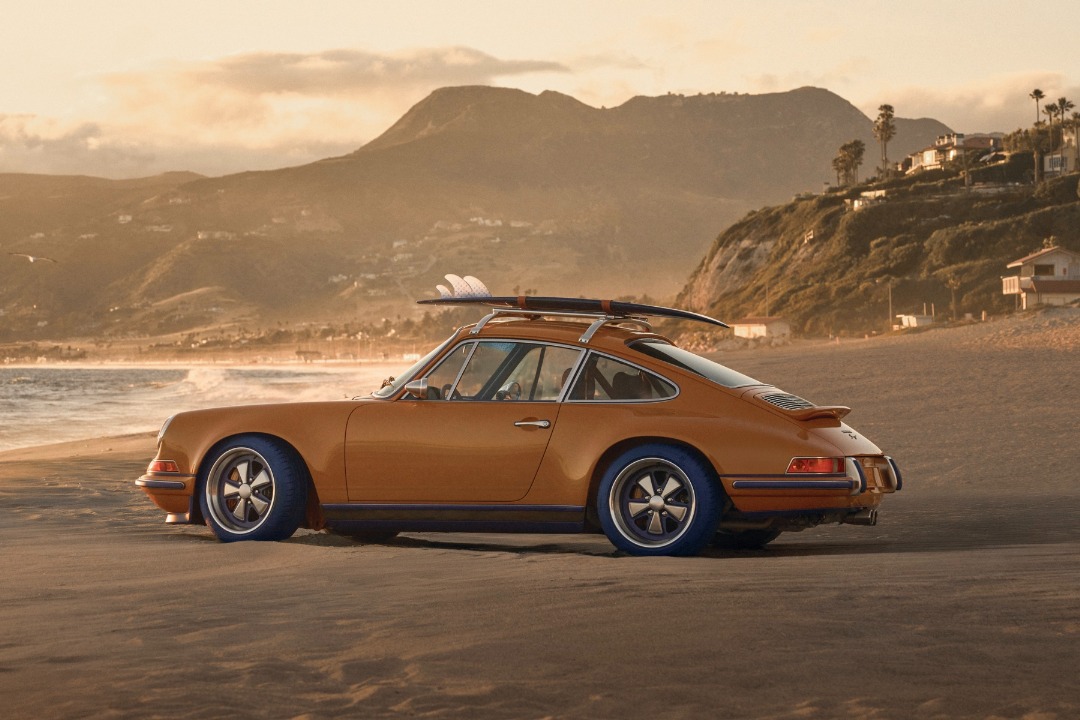
There are two of them, and they're not the same recipe in different colours. The first is a Porsche 911 Reimagined by Singer - Classic, built on the Type 964 coupé chassis with lightweight carbon-fibre bodywork in saffron, a speed-activated rear wing, a 4.0-litre naturally aspirated air-cooled flat six, a six-speed manual, signature rear-wheel drive and carbon-ceramic brakes. In other words, a proper Singer, dressed in LV's saffron-and-cobalt colours with a roof rack that'll take a trunk, a surfboard or a pair of skis. This is the road-trip car, the one that wants you to actually go somewhere.
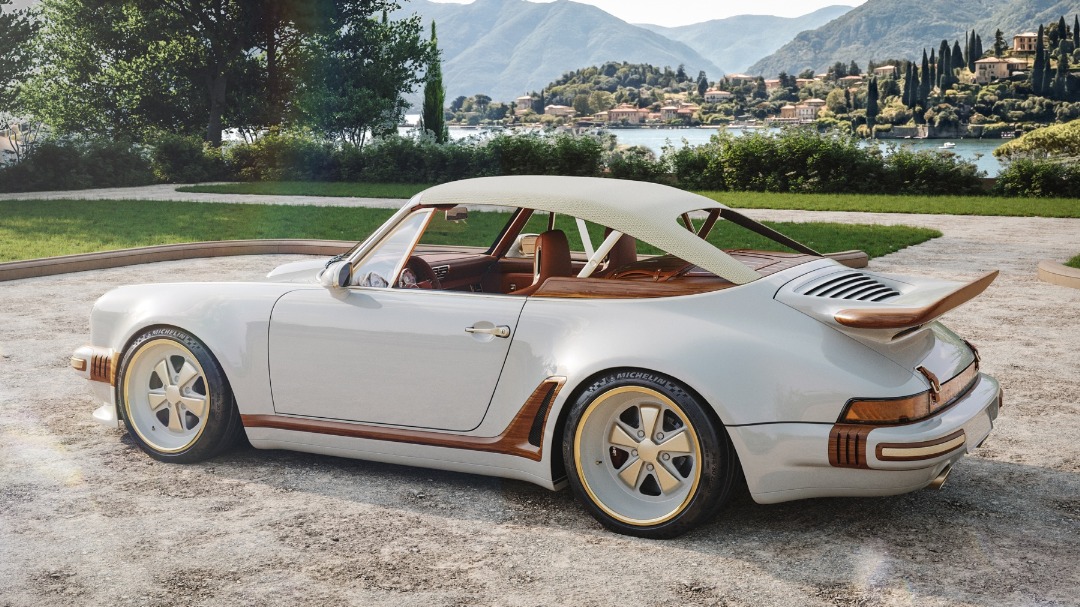
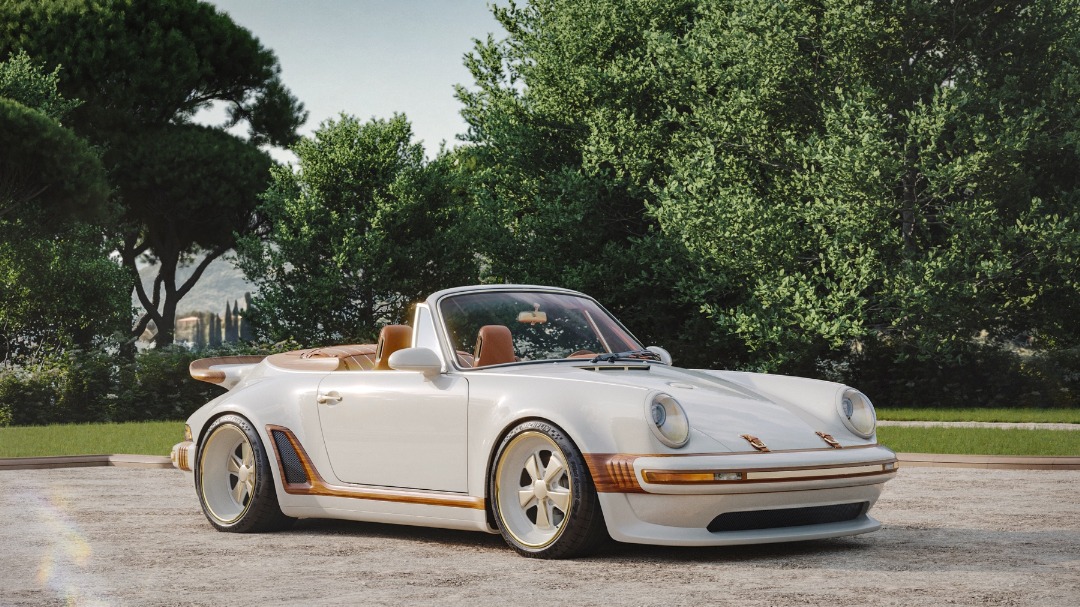
The second is a Porsche 911 Reimagined by Singer - Classic Turbo, a 964 cabriolet in Calcaire Lutétien white with a whale-tail wing, a 3.8-litre twin-turbo flat six with air-to-water intercooling, a six-speed manual with selectable drive modes, and carbon-ceramic brakes again. Nicolas Ghesquière, LV's artistic director for women's collections, shaped this one, and his brief was basically "boat." Teak-inspired wood appears everywhere, a rear luggage deck varnished like a runabout, and a clock sits in the centre of the console rather than behind the wheel. It's the softer, showier, sunnier of the pair.
The obsessive bit
Here's where it stops being a fashion exercise. In the coupé, the plastic switchgear you'd normally find in a car interior has been replaced with hand-crafted metal, mostly rhodium-plated, finished with the same polishing and satin techniques LV uses on watches. The seats carry the diamond "malletage" pattern from the inside of the brand's trunks. The fuel and oil caps wear the typography from LV's watch dials. Even the demonstration tyres are cobalt blue, a nod to the ribbons on the packaging. This is the kind of detail work that either delights you or makes you slightly uneasy about how many people spent how long on a fuel cap. Probably both.
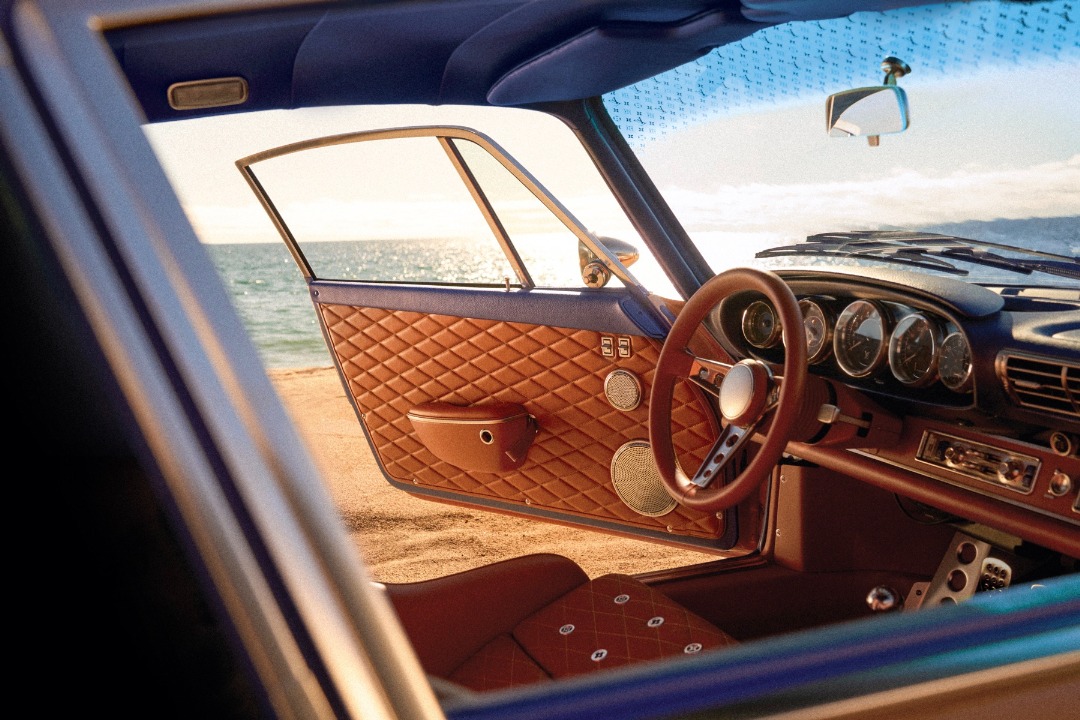
And of course there's a wardrobe. Both cars come with a full capsule collection, leather racing jackets, driving gloves, helmets, bespoke luggage cut to fit the nose of the car, even a surfboard hand-built in Angers with monogram marquetry in oak and walnut. The luggage genuinely is the point here, given LV has been making trunks that bolt to cars since 1897. That's not a retcon. Georges Vuitton was designing patented car trunks before most people had seen a car.
So what is it, really?
It's not a car you or I will drive, and there's no pricing here because these were never going to have a window sticker. What it actually is, is a demonstration. Singer proving it can build to a standard even fussier than its own. Louis Vuitton proving that "the art of travel" isn't just a tagline printed on a shopping bag. Two houses egging each other on until a dashboard clock turned into a pair of Porsches.
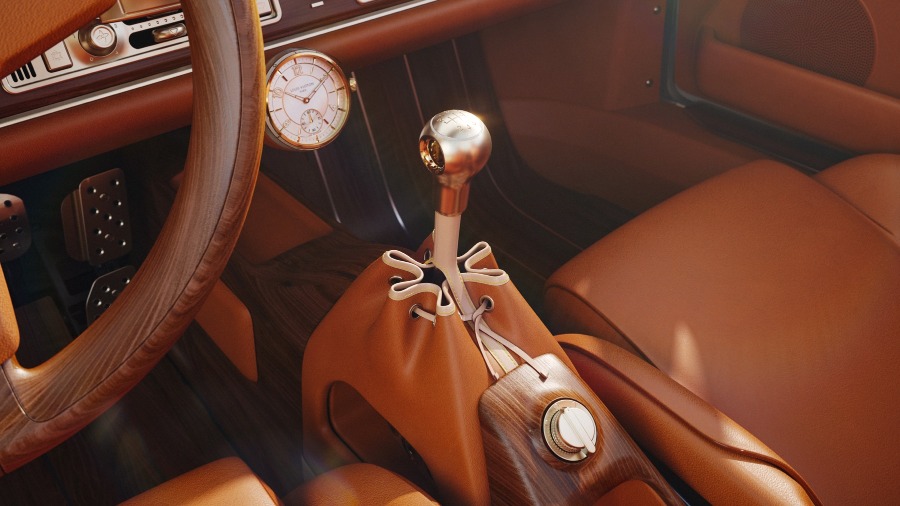
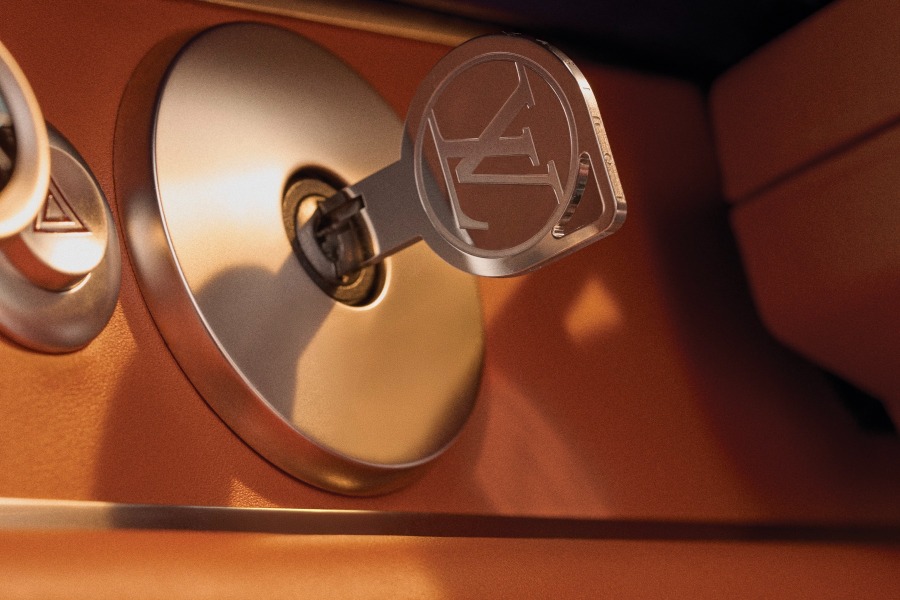
Cynical? Sure, you can be. But I've seen plenty of luxury tie-ins before that were a decal and a press release, and this is simply not another of those. When the collaboration extends all the way down to how the light catches a knurled metal switch, someone really cared. And caring craftsmanship, done to this level, is rare enough to be worth noticing, even if the closest most of us will get are these photos.