The fifth-generation BMW X5 has burst from its US factory, and the headline isn't the styling or the screens. It's that BMW has built one car and plans to give it five different ways to move. Petrol, diesel, plug-in hybrid (PHEV), full electric (EV) and - a bit later - Hydrogen. In a market where every other manufacturer is busy nailing its colours to one propulsion mast, BMW has quietly decided it doesn't have to choose. You do.
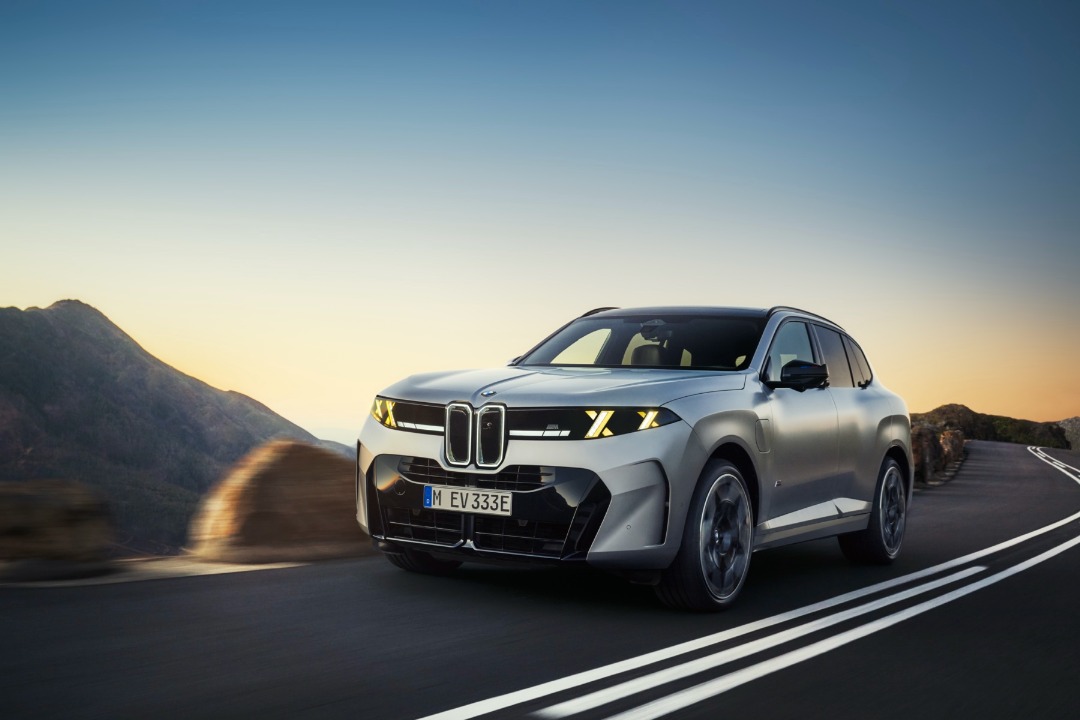
The X5 isn't a fringe product. It's one of the cars that pays BMW's bills, sold by the boatload (quite literally) across every market that matters. So when BMW hedges this hard on powertrains, it's not a science experiment. It's a read on where the world actually is: some buyers want a straight-six and a fuel bowser, some want to plug in at home, some want to go fully electric, and a small but real slice would take hydrogen if the infrastructure ever catches up.
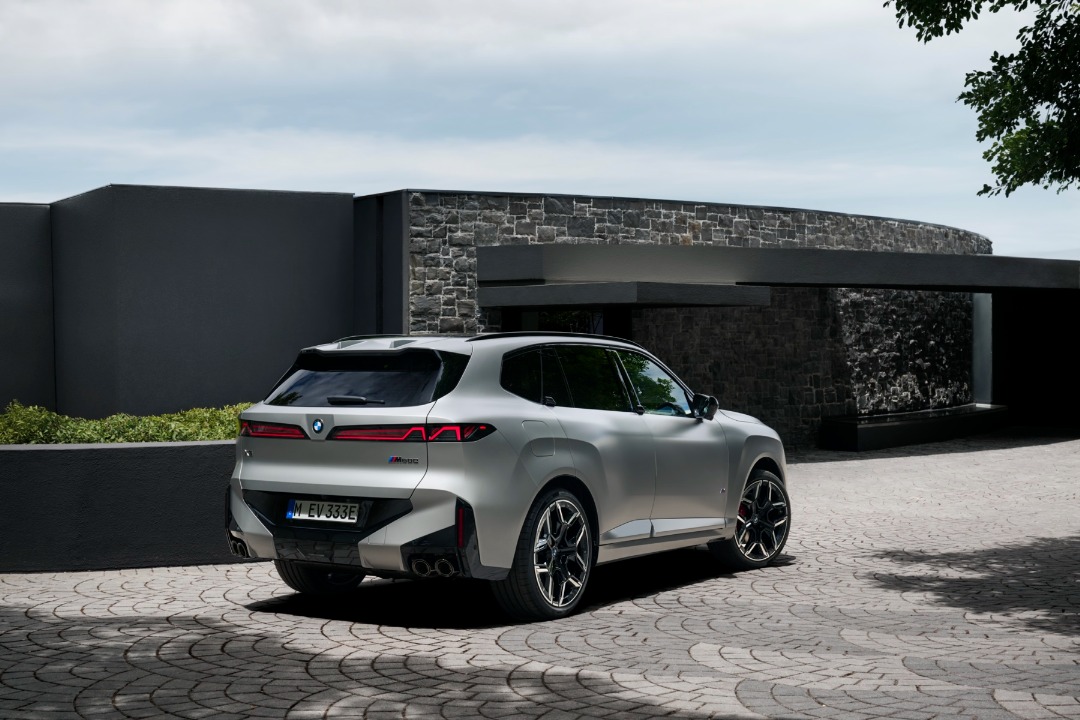
Start with the engines that still burn things, because they're not afterthoughts. The petrol 40 xDrive runs a 3.0-litre turbo six with 48V assistance, now up to 294 kW, and it'll do 0-100 in 5.3 seconds. The 40d diesel keeps the faith with 230 kW and a muscular 670 Nm, and it'll still crack 0-100 in 6.1 seconds - this will be the top seller in Australia, where we do quite a bit of towing and cover real distances. Then there are two plug-in hybrids, and the 50e is strong at 360 kW, but the one to note is the M60e. It's an M Performance PHEV making 450 kW and 800 Nm, 0–100 in 4.5 seconds, with around 80–100km of electric range on the WLTP cycle. That's a proper fast SUV that can also do the school run on electrons alone. It's a clever bit of having-it-both-ways.
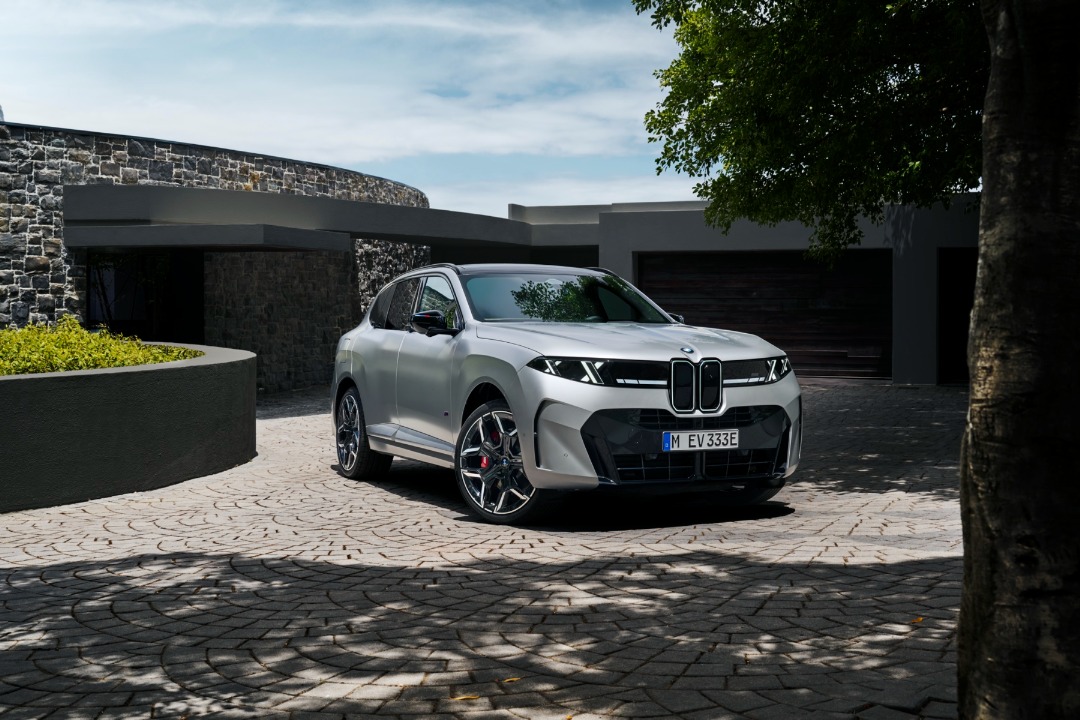
The full EV is the iX5 60 xDrive, and this is where BMW's sixth-generation tech comes into play. It's an 800-volt car with a 141kWh usable battery, dual motors producing a combined 425 kW and 805 Nm, and 0–100 in 4.6 seconds. The numbers that matter for living with it are the range and the charging: up to 845km WLTP and DC charging at up to 460kW, which takes it from 10 to 80% SOC in 23 minutes or adds 350km in 10 minutes. All of that capability comes at a cost you can feel, mind you - the iX5 tips the scales at 2,900kg, which is a lot of car to haul around, battery tech or not. Whether you ever see 460kW at an Australian charger is another question entirely, but the architecture is there, along with bidirectional charging so the thing can power your house if you want it to. BMW has also confirmed a hotter all-electric M Performance version and a V8 are coming down the line, though it's staying quiet on specifics for now.
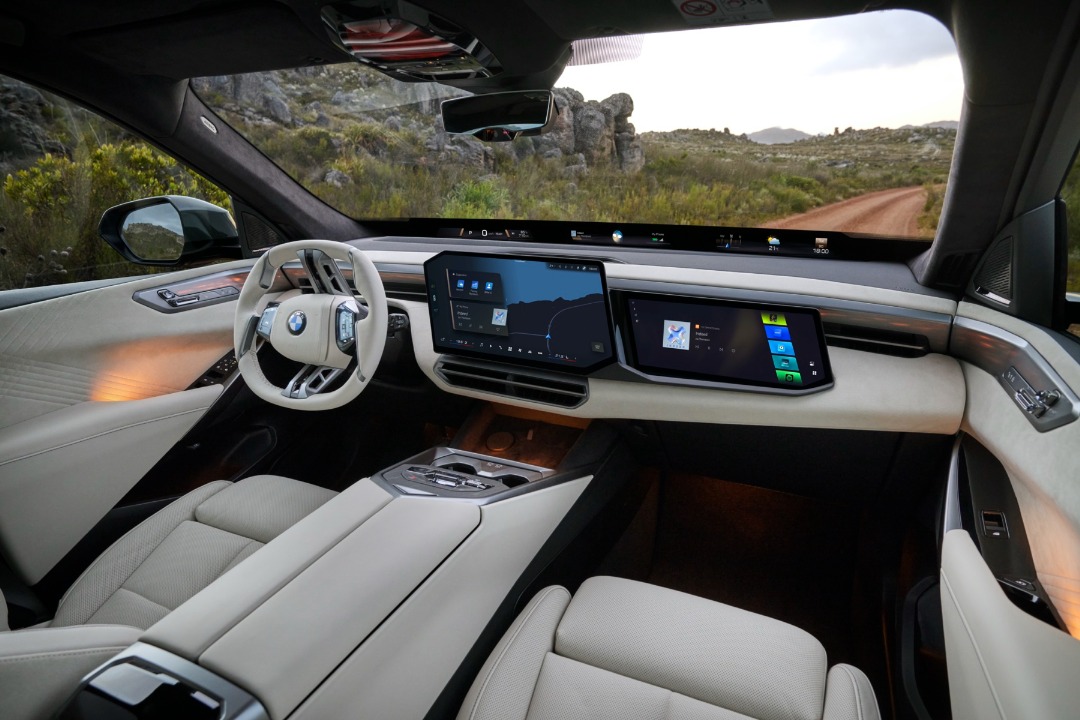
Then there's the iX5 Hydrogen, and it's worth being clear about what this actually is: a prototype still in development, not a car you'll be ordering alongside the others. It runs the third-generation fuel-cell system co-developed with Toyota, storing at least 7kg of hydrogen in seven carbon-fibre tanks, with a claimed range of up to 750km and a refuel in under five minutes. It'll only ever make sense where you can actually fill it, but it's telling that BMW has engineered the X5 from the outset to swallow a hydrogen drivetrain without eating into cabin space. This is BMW keeping the door open, not walking through it just yet.
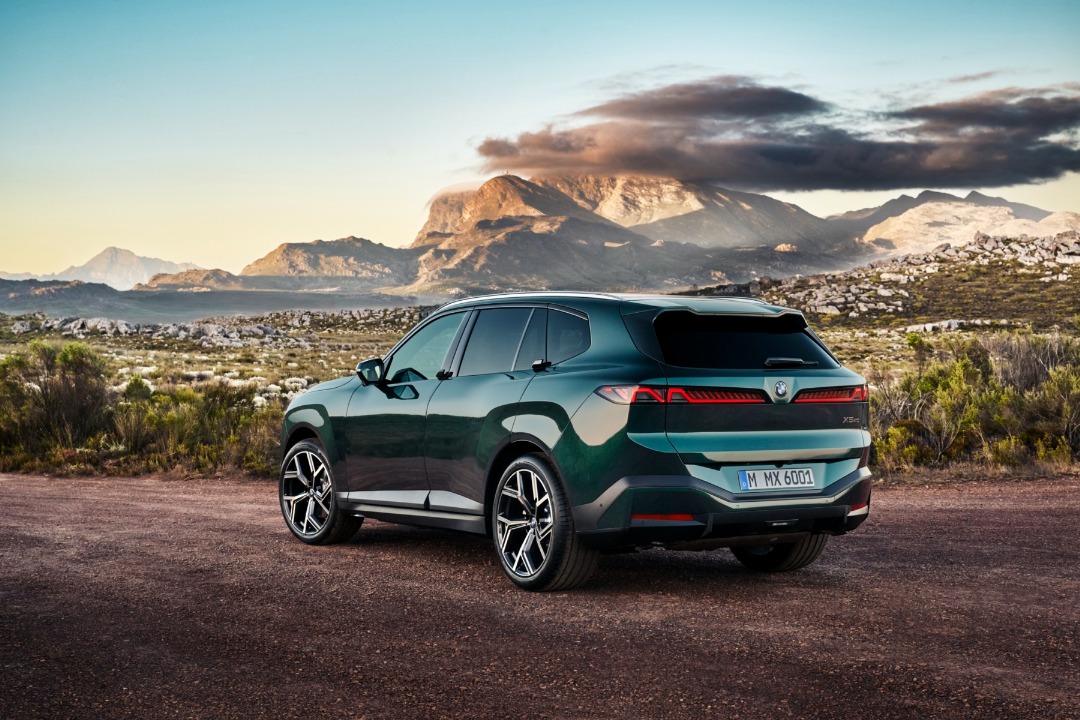
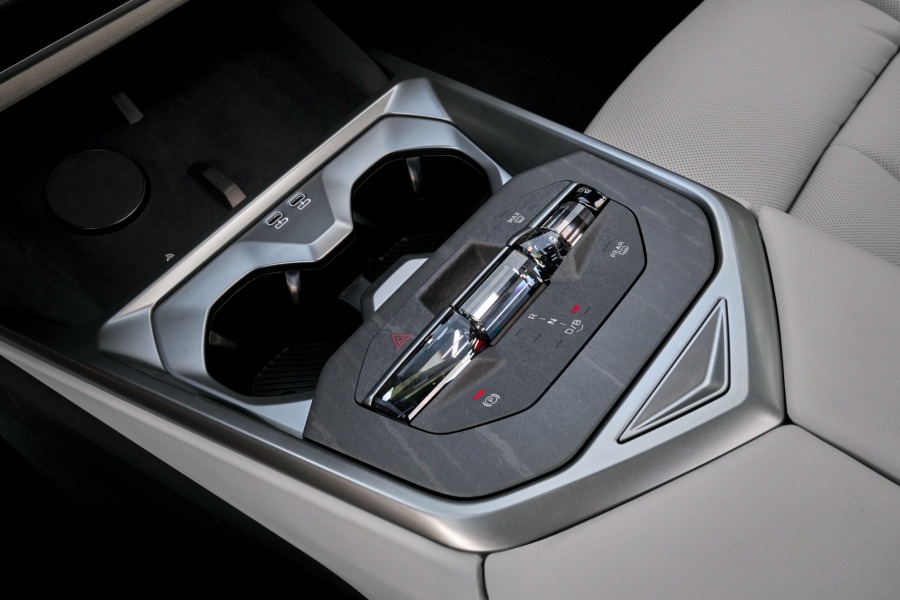
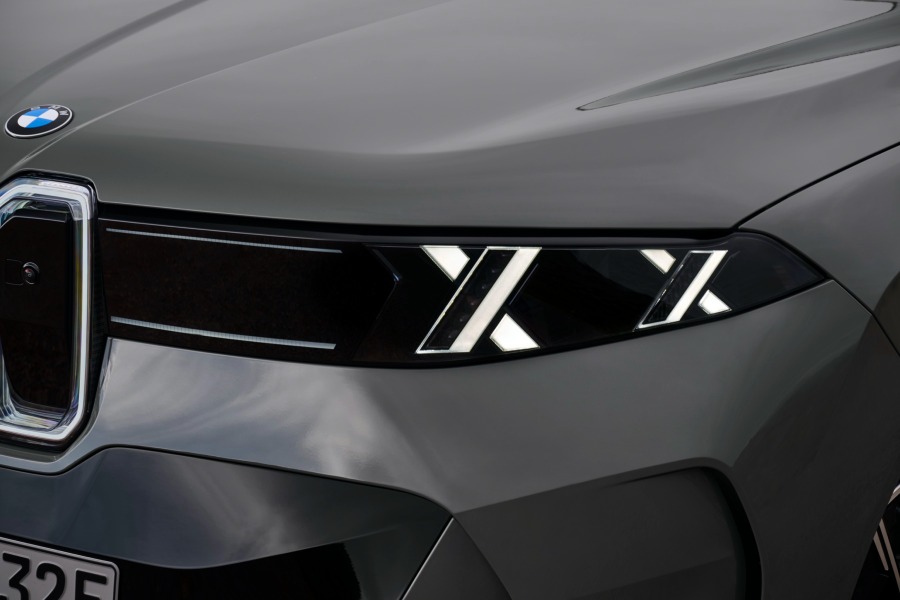
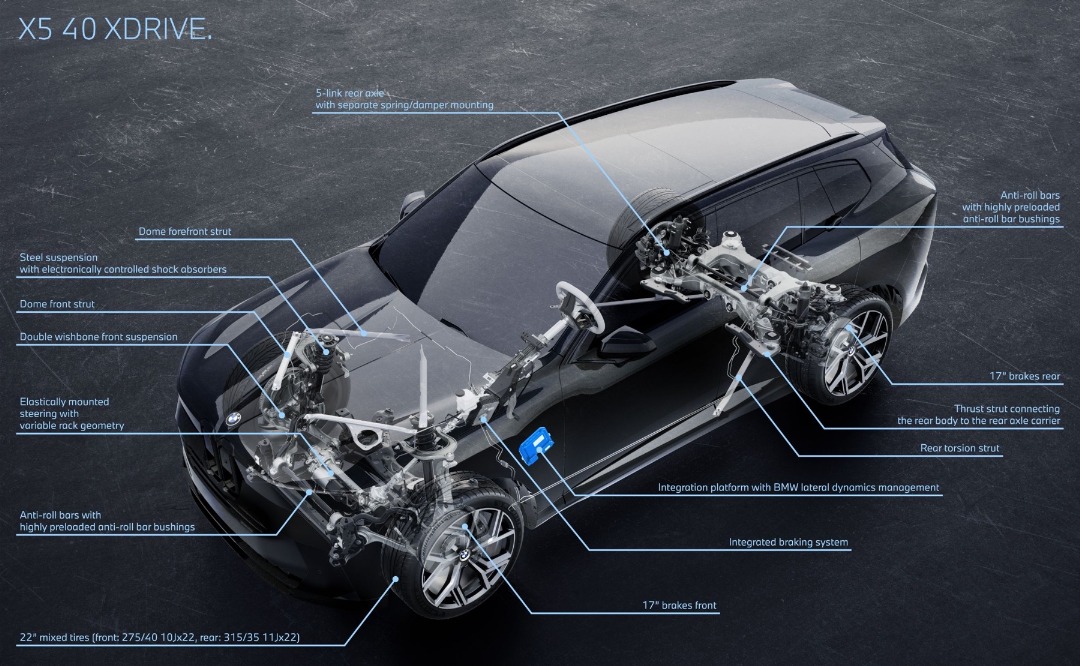
Design-wise, the (G65) X5 brings BMW's Neue Klasse language to the big SUV: a taller, more upright front, cleaner surfaces, an illuminated vertical kidney grille, and new double-X LED light signatures at the front. Wheels now go up to 23 inches for the first time. Inside, it's the full Panoramic iDrive treatment - content projected across the base of the windscreen, a 17.9-inch central touchscreen, an optional 14.6-inch passenger screen you can watch video on while moving, and the new Operating System X (not sure Apple will like the 'OSX' acronym) running the show, with Amazon Alexa baked into the assistant. Adaptive suspension is standard across the range, weight distribution stays close to 50:50 (BMW DNA), and there's active rear steer and roll stabilisation on the options list. BMW clearly still wants this thing to drive like a BMW, not a lounge room. The new X5 is very familiar, and it's the future of the BMW SUV, in a handsome, heavy package.
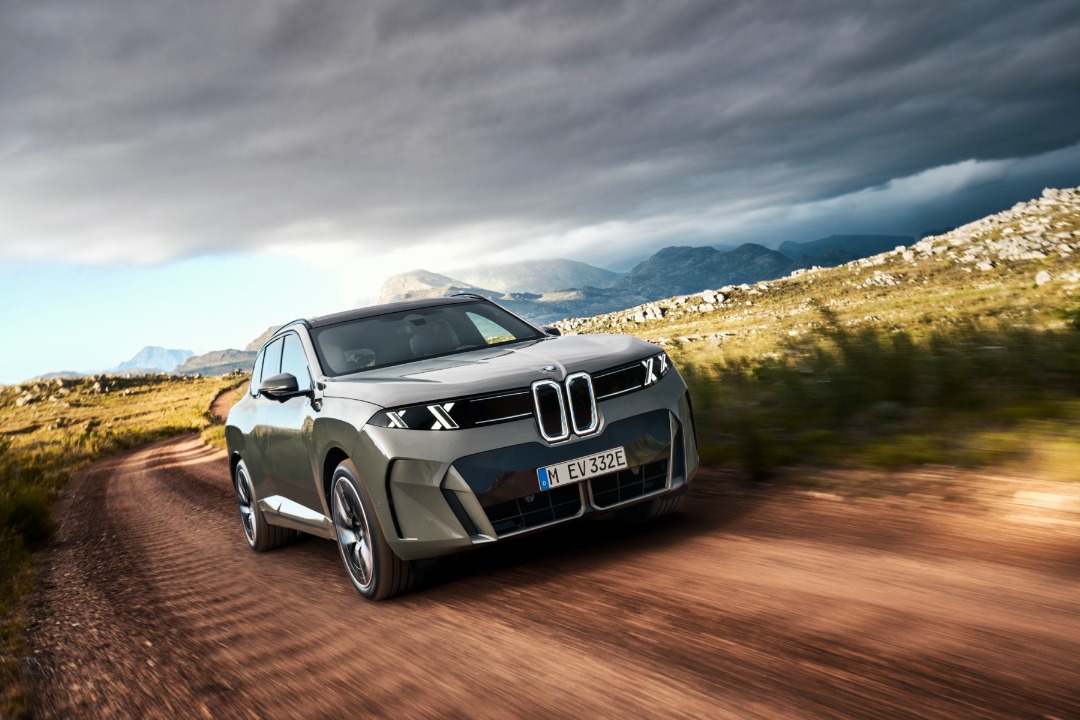
Looking more closely at the spec sheets, BMW knows where its bread is buttered. Exterior colour favourites such as Carbon Black (deep dark blue) and Tanzanite Blue are available across the range, as is a new Vancouver Green metallic. Alpine White, Manhattan metallic, and Brooklyn Grey will also be available.
Production starts in Spartanburg, SC, in August, with the combustion cars reaching global markets starting in late November and the electrified versions in early 2027. For us, there's no confirmed Australian timing, no local line-up and no pricing yet - expect it to surface here late in 2026, with details to follow. Expect a range-topping X5M Hybrid to follow in 2027.
The X5 line-up at a glance:
| Model | Power (kW) | Torque (Nm) | 0–100 km/h | Key detail |
|---|---|---|---|---|
| X5 40 xDrive (petrol) | 294 | 580 | 5.3s | 3.0L turbo six, 48V mild hybrid |
| X5 40d xDrive (diesel) | 230 | 670 | 6.1s | Torque-rich long-hauler and tow rig |
| X5 50e xDrive (PHEV) | 360 | 700 | 5.0s | ~86–102km WLTP electric range |
| X5 M60e xDrive (PHEV) | 450 | 800 | 4.5s | M Performance flagship of the plug-ins |
| iX5 60 xDrive (EV) | 425 | 805 | 4.6s | 800V, 141kWh, up to 845km WLTP, 2,900kg |
| iX5 Hydrogen (FCEV) | Prototype - in development | — | - | Gen3 fuel cell with Toyota, ~750km claimed |
Which five of those powertrains actually make the trip Down Under is the question worth watching.
I look forward to driving the new X5 and seeing how it compares to the incredibly popular G05 version.