Every August, the car world decamps to the Monterey Peninsula in California and quite ostentatiously loses its mind. Concours lawns at Pebble Beach, seven-figure auctions, and manufacturers falling over each other to say "look at us" in the most expensive way possible. This year Range Rover has come up with one of the more genuinely clever ideas I've seen from the Monterey circus in a while: they've taken a 1993 Range Rover Classic, restored it to within an inch of its life, and painted and trimmed it to match a brand-new SV Ultra. Then they're selling the two of them together, as a matched pair, at the RM Sotheby's Monterey Auction on Friday 14 August.
It's a marketing exercise, obviously. But it's a very good one, because underneath the Pebble Beach theatre there's a real story about where this brand came from and how far it's travelled.

Thirty-something years apart, wearing the same clothes
The older 'Rangie' is a Titan Silver Classic. The new one is the SV Ultra, done in a duo-tone Orchid White and Cinder Grey colourway. On paper those don't sound like they'd sit together, but that's the point of the whole exercise: the Classic has been finished to echo the modern car, so the two of them read as a set rather than a coincidence. Park them nose to tail and you get a very direct visual answer to the question every Range Rover owner secretly wants to ask, which is "how much has actually changed?"

The honest answer is: a colossal amount, and also almost nothing. The silhouette, the floating roof, the upright glasshouse, the whole idea that a proper luxury off-roader can look calm rather than aggressive. That DNA is unmistakable across both cars. Everything else, the way it drives, the way it's built, the technology, has moved on by about three decades.
The restoration is the real flex
Here's where I sit up a bit. Range Rover says the Classic took more than 2,000 hours to restore. That's not a number you throw around lightly. Two thousand hours is the better part of a full working year for a single person, and on a job like this it's spread across a team of people who genuinely know these cars.
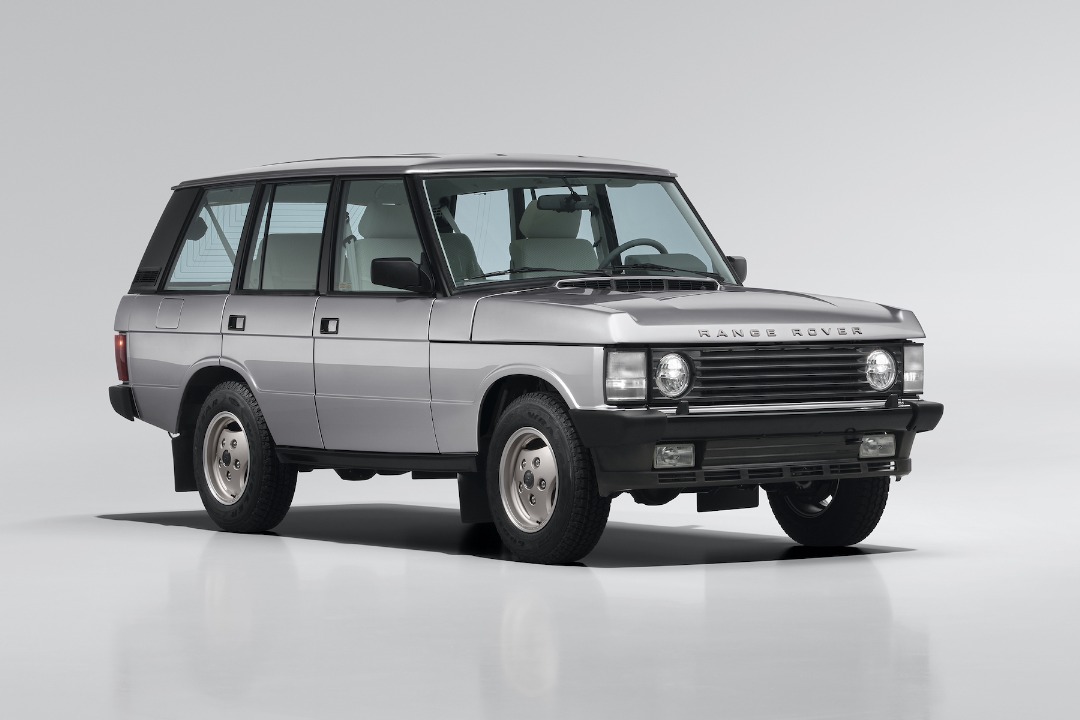
That work happens through Range Rover's Classic division, and this pair is basically a showcase for what that division can do when a client turns up with a chequebook and a specific vision. Which is the quieter commercial motive behind the whole thing. Yes, it's a lovely story for the wind-swept coastline of Carmel and Monterey, but it's also an advert aimed squarely at the sort of owner who wants their heritage car restored to a factory-backed standard rather than handed to a local specialist and hoped for the best.
Ultrafabrics, and a small first
The detail that caught my eye is the interior. This is apparently the first time a Range Rover Classic restoration has used Ultrafabrics, the same duo-tone Orchid White and Cinder Grey treatment lifted from the SV Ultra. That's a nice bit of continuity, and it tells you something about how the Classic division works now. They're not slavishly recreating 1993 spec down to the last thread. They're happy to bring modern materials into an old shell if it serves the finished result and ties the two cars together.
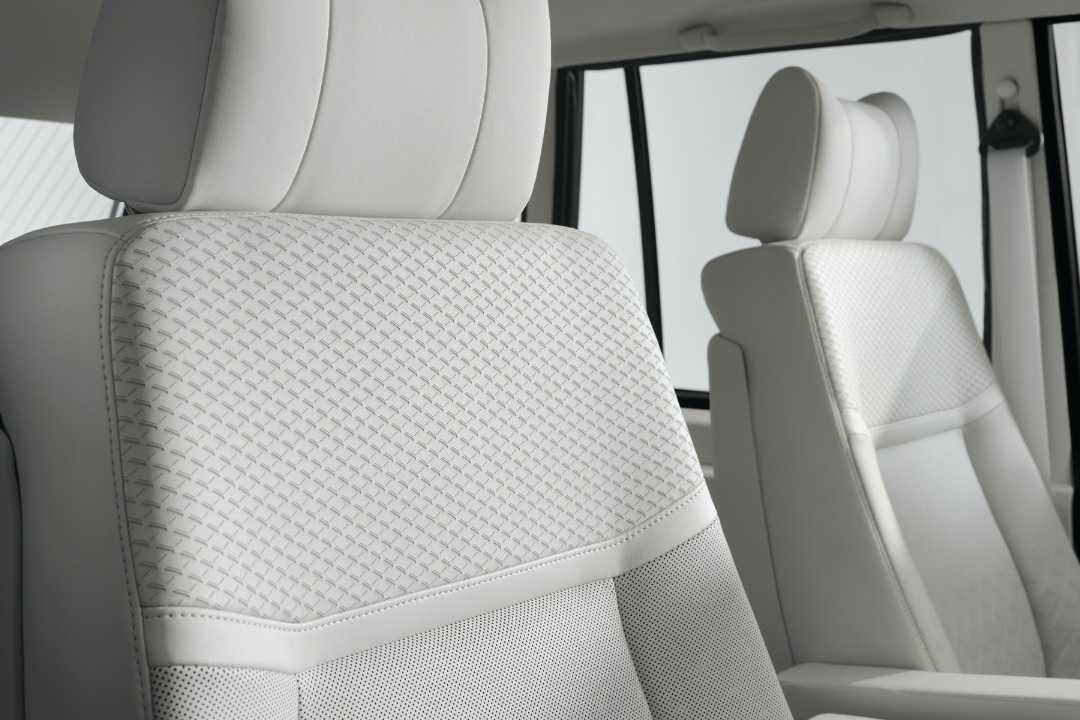
Ultrafabrics is a Japanese-engineered, animal-free textile used across luxury automotive, aviation, yachting, and high-end furniture - chosen where premium leather has traditionally been the default. What makes it genuinely distinctive is its construction: a proprietary micro-cell foam base bonded to a polyurethane top layer, producing a material that replicates the softness and texture of fine leather while dramatically outperforming it on durability, UV resistance, moisture resistance, and ease of maintenance.
For a classic Range Rover restoration such as this, the relevance is twofold - it solves the eternal problem of original leather that has cracked, faded, or deteriorated beyond repair, while offering period-correct aesthetics in a material that will still look immaculate in another 25 years. It's the choice of restorers who want the cabin to look as good as the bodywork.
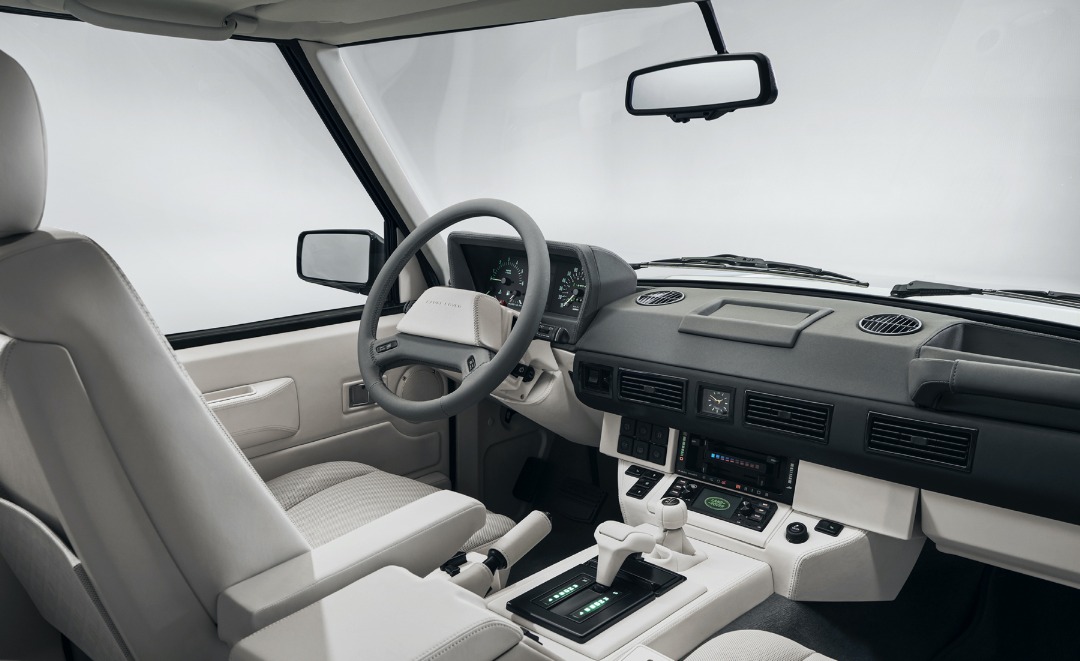
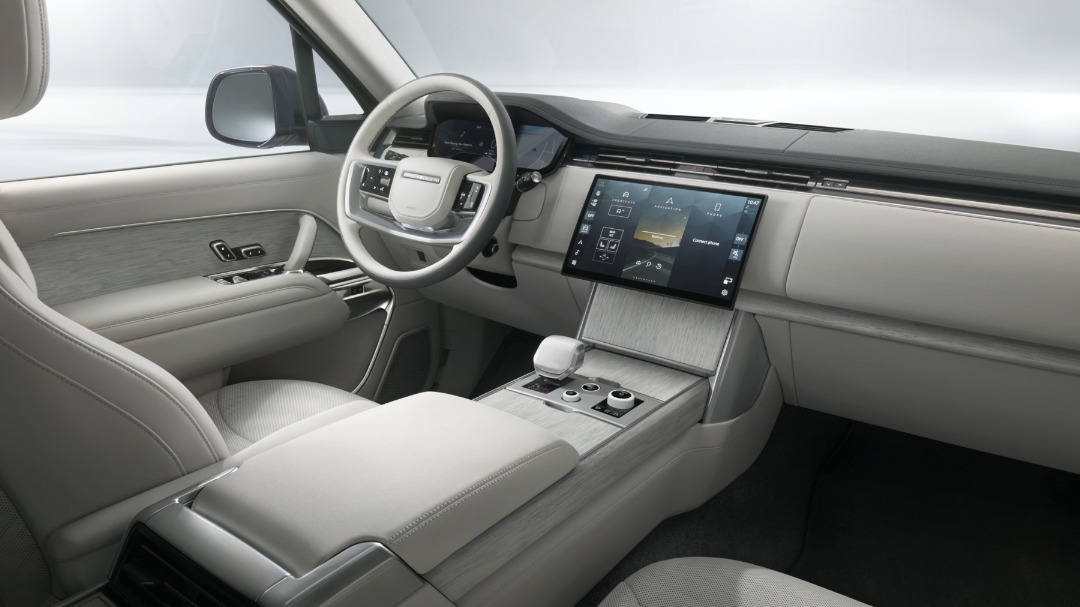
That might make some purists twitch, and I get it. There's an argument that a 1993 car should be trimmed in 1993 materials. But this was never meant to be a museum piece. It was built to be one half of a pair, and on those terms the choice makes complete sense.
Buy one, get the theme
The matched pair goes under the hammer as part of RM Sotheby's The Monterey Auction on Friday 14 August, with previews running from Wednesday 12 August. No word here on what the estimate is, and frankly I'd be guessing if I threw a number at it. Restored Classics with genuine provenance and a factory-backed rebuild already command serious money, and pairing one with a current SV Ultra as a curated set only pushes that further.
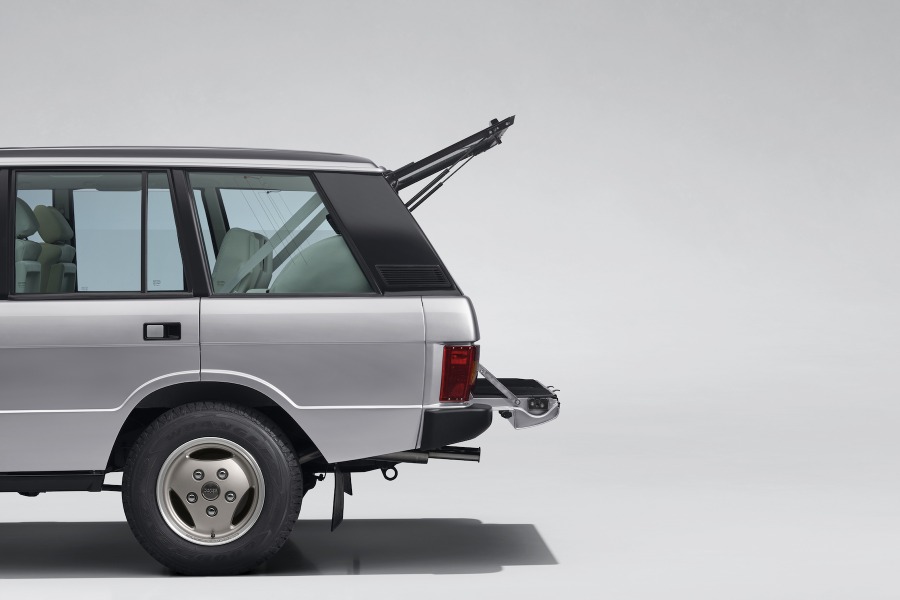

Is it a car you'd actually use? The SV Ultra, sure, every day of the week. The Classic will most likely spend its life being admired and occasionally aired out on a dry Sunday, which is the fate of most cars that survive a 2,000-hour restoration. But that's not really the point.
The point is the gap between the two. Stand between a 1993 Titan Silver Classic and a 2026 SV Ultra and you're standing in the middle of one of the more interesting continuity stories in the car business. Same idea, executed two completely different ways, three decades apart, and still recognisably the same thing. That's rarer than it sounds, and it's worth more than a Pebble Beach photo opportunity.
Monterey Car Week kicks off on August 7 and runs through August 16. Follow along on Instagram and YouTube.
Postscript: The pair of Range Rovers sold successfully at the RM Sotheby's Monterey auction for just under US$1M.