Let me start with a confession. The Tucson has always been one of those cars I find almost impossible to get worked up about, and I mean that as a compliment. It's the chicken schnitzel of the SUV world. You order it, you know exactly what you're getting; it never disappoints, and it never surprises. For a decade it's been the quietly competent choice for intelligent people who wanted a mid-size family SUV that worked, held its value and didn't make a fuss. That is a harder trick to pull off than it sounds, and Hyundai has pulled it off better than almost anyone.
%20-%20006.jpg?alt=media&token=b408dc0a-93ff-4a28-abd9-e330d9aafb2f)
So the news that there's an all-new Tucson coming, and that Hyundai has thrown the full makeover kit at it, is genuinely interesting. Not because the old one needed saving, but because the bar was already high. You don't glam up a car that was selling fine unless you reckon you can move the game on. Hyundai clearly reckons it can.
Now, a caveat before we go further, and I'd rather be upfront about it than pretend otherwise. This is a car Hyundai has only just revealed to the world, with the global premiere staged against the Manhattan skyline, and it doesn't reach Australian showrooms until the middle of 2027. So what follows is based on what Hyundai has told us, not on a week behind the wheel. I haven't driven it. Nobody outside Hyundai has driven it on our roads. When the local cars arrive, and we can actually put one through a Southern Highlands commute and a run down the freeway, I'll be able to tell you whether the reality matches the brochure. For now, treat the specifics as Hyundai's promises rather than my findings.
%20-%20005.jpg?alt=media&token=2b344fb2-65f8-45c5-8e10-2a167ae7dfaf)
The design is the headline. Hyundai is calling the new look the "Art of Steel," which is exactly the kind of phrase that makes me want to lie down in a dark room, but strip away the marketing poetry and the intent is clear enough. The outgoing Tucson was already one of the boldest-looking things in its class, all sharp creases and those hidden daytime running lights that lit up like something out of a sci-fi film. Hyundai is leaning harder into that. The company talks about a "Boldest SUV" vision, and if the new car carries even half the visual drama of the concept imagery, it'll stand out in a car park full of anonymous grey crossovers. That matters more than people admit. Most buyers in this segment won't tell you they chose a car because it looked good, but they did.
%20-%20009.jpg?alt=media&token=d7df8722-ab31-4e6c-86d8-acbc1671784a)
Inside, the promise is a more refined, more spacious cabin with intuitive controls, flexible storage and what Hyundai coyly calls "relaxation features." I'll believe the relaxation features when I'm reclining in one, but the broader direction is right. The current Tucson's interior was a strong point, roomy and sensibly laid out, and if the new one builds on that rather than chasing gimmicks, families will be well served. The thing I'll be watching closely is the balance between touchscreen and physical controls. Plenty of manufacturers have buried the climate controls two menus deep in the name of a clean dashboard, and it drives me up the wall. Hyundai says "intuitive." We'll see.
%20-%20008.jpg?alt=media&token=a8ca98cc-2fd5-48fb-b4ff-b634af862702)
The technology story is where I get a little wary. The new Tucson debuts something called Pleos Connect, an infotainment system powered by an AI assistant Hyundai has named Gleo, with an app marketplace that's meant to keep expanding over the life of the car. On one hand, good. A car that gets better after you've bought it, rather than feeling dated the week the next model lands, is a genuinely appealing idea. On the other hand, I've heard the "ever-evolving digital experience" pitch before, and it often means a system that's complicated on day one and buggy by year three. The real test of in-car software isn't how clever it is at launch. It's whether it still works smoothly, loads quickly and doesn't nag you after three years and a dozen over-the-air updates. Ask me again in 2030.
The powertrain news is the most important bit for Australian buyers, and it's also the clearest. The new Tucson arrives here with a hybrid, and Hyundai is talking up a next-generation hybrid system that's meant to sharpen both fuel economy and driving performance. The current Tucson hybrid is already a sensible thing, so an improved version is exactly what the Australian market wants right now. With fuel prices where they are and a growing chunk of buyers not quite ready to commit to a full EV - not to mention the fatigue of Chinese offerings and their supply & ownership issues - a genuinely efficient 5-seat hybrid family SUV is more triple 20 than bullseye. I just want to know the real-world numbers, not the lab ones, and I'll reserve the fuel-economy verdict until I've driven one with a full boot and the air-con working hard over the Macquaire Pass.
%20-%20004.jpg?alt=media&token=3d09439e-0867-4acb-8bb8-7119920d18c0)
There's also a tougher-sounding variant in the mix, the Tucson XRT PRO, which gains Smart Terrain Assist and a suite of off-road technologies. I'll be measured here. A dressed-up soft-roader with some clever traction software is not a LandCruiser, and anyone expecting to tackle serious bush tracks should keep their expectations honest. But for the gravel roads, wet grass and muddy campsite access that most of these cars will ever actually face, a bit of added capability and the confidence that comes with it is no bad thing. If it stops a few families getting bogged at the footy on a wet Saturday, it's done its job.
So where does all this leave us? The Tucson didn't need rescuing. It was already the dependable, sensible, quietly excellent choice in one of the most competitive corners of the market. What Hyundai has done is take a car that was winning on substance and give it a proper dose of style and showroom appeal, plus the hybrid and tech upgrades to keep it current. On paper, that's a smart move and a welcome one.
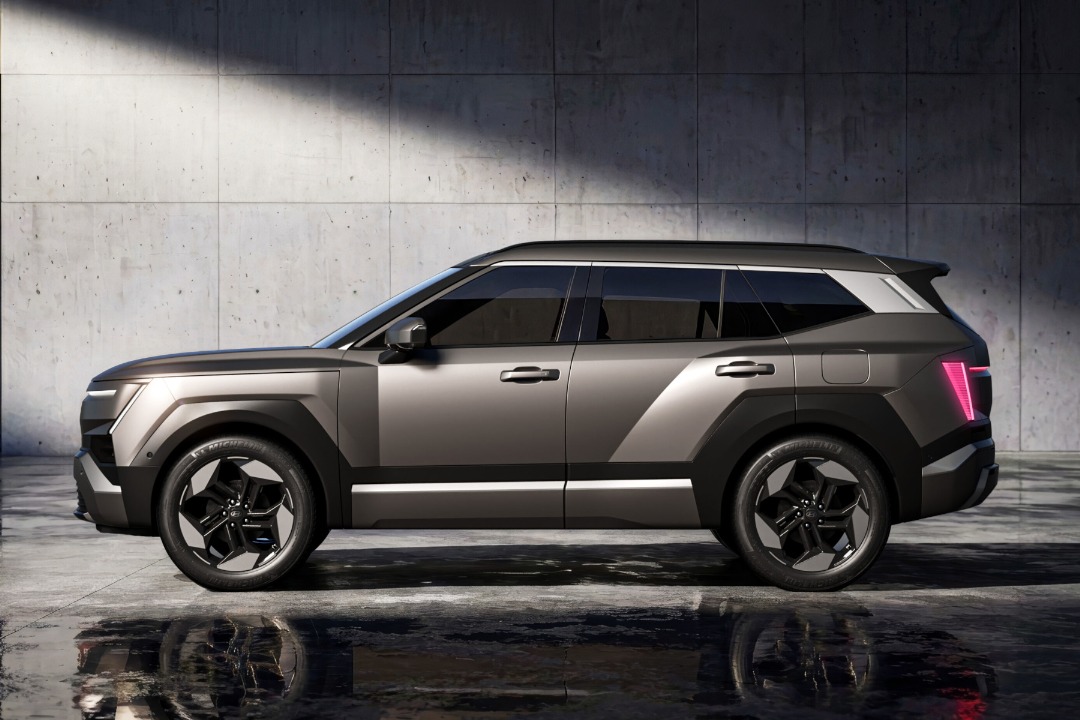
The flip side is that the mid-size SUV segment is a bloodbath right now, with sharp new rivals arriving almost monthly, many of them undercutting the established players on price. A makeover and a clever infotainment system won't be enough on their own. Hyundai will need to get the Australian pricing right, and it'll need the new hybrid to deliver in the real world, not just in the press release. That's especially true for the mid-range trims, the Elite and the N Line-flavoured cars, which is where most Australians actually spend their money rather than on the flagship.
I'm optimistic, with the sensible scepticism of someone who's been promised a revolution by a car brochure more than once. The ingredients look right. The design is bold, the hybrid direction is spot on for our market, and the bones underneath were already among the best in class. If Hyundai lands the price and the hybrid lives up to the hype, the glammed-up Tucson could be the quiet overachiever all over again, just with a better haircut this time. We'll know for sure when it arrives in the middle of 2027. I'll be first in the queue to find out.