If you need to move eight people in 2026, your options in Australia are getting thin. The classic people mover is being squeezed by SUVs and dual‑cab utes, but for big families, rideshare operators, or anyone hauling humans more than hardware, a proper van‑based people mover still makes the most sense.
That’s where the Hyundai Staria Highlander comes in. It’s one of the last of the breed: a genuine 8‑seat people mover with sliding doors, huge glass, a flat floor and serious cargo space. Over more than 2,700km of mixed driving - city, regional highways, and plenty of long open‑road stints - it showed exactly why the layout still works so well in the real world. The Staria has been around since 2021 in passenger and very popular commercial variants. With a new EV model on the horizon and a factory campervan version on display at the Brussels Motor Show, Hyundai knows it is onto a winner.
It isn’t perfect. The 2.2‑litre diesel is both the hero and the villain, the front seats are missing one very obvious feature, and the sheer size of the thing will intimidate some drivers. But if you value comfort, space and real‑world usability over posing at the café, the Staria Highlander deserves a serious look.
Design & Exterior
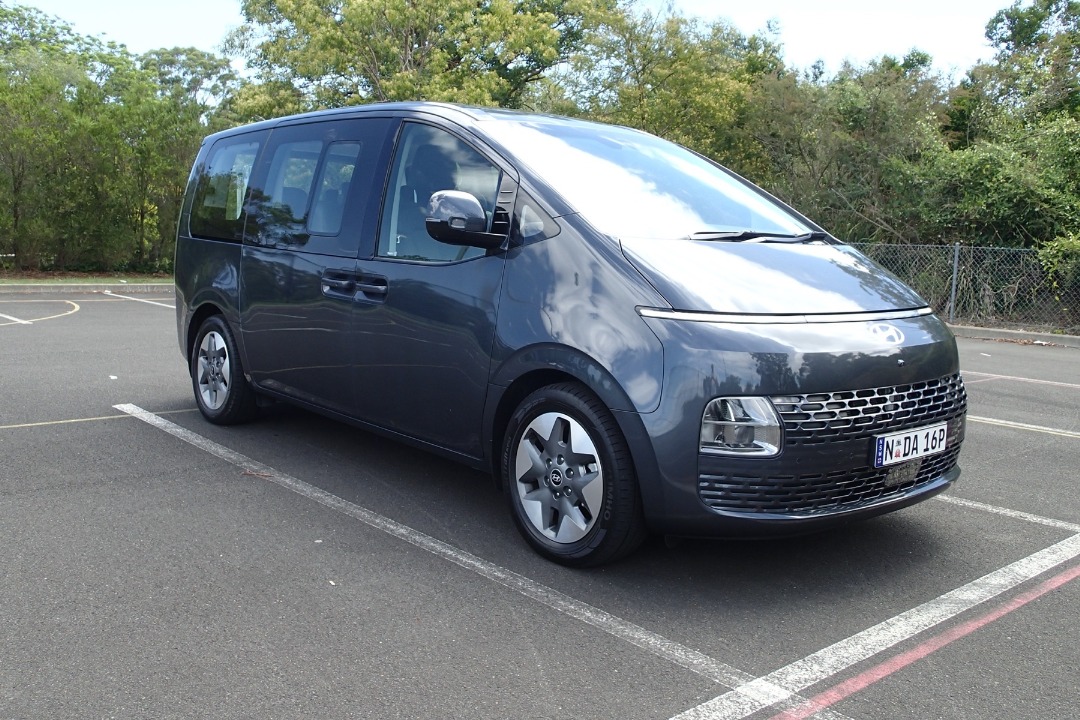
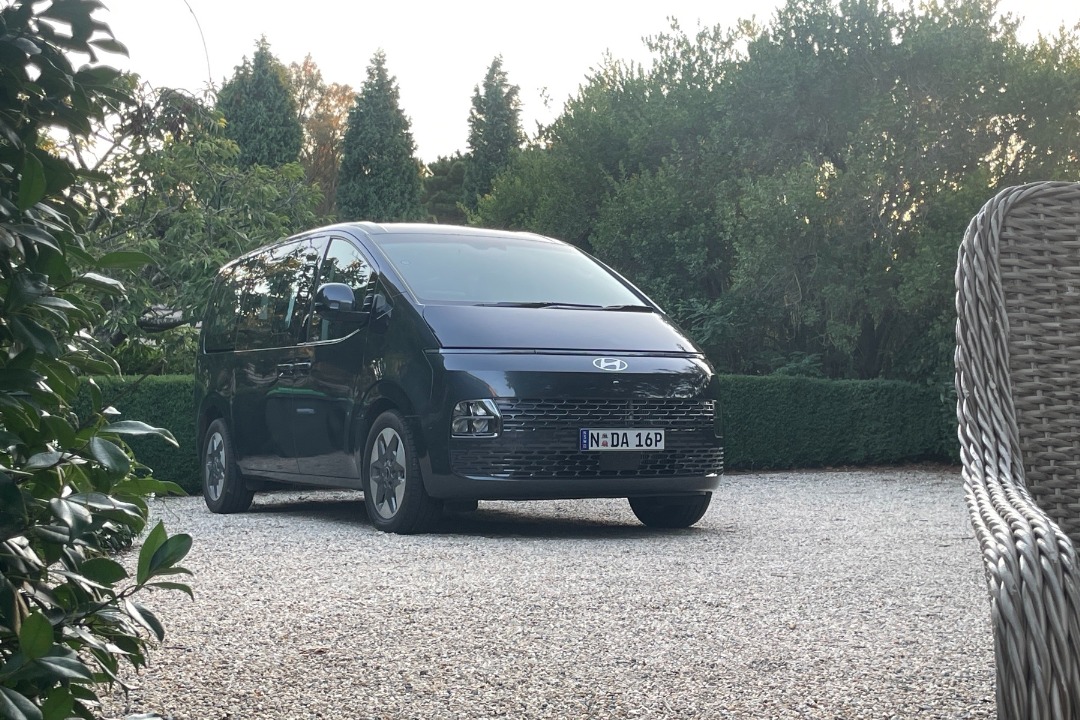
Hyundai copped plenty of comments when the Staria first lobbed with its sci‑fi styling. A few years on, it’s fair to say this design has really grown into itself.
The front end still looks like a concept car - with that full‑width LED light bar and simple, almost spaceship‑like face - but on Aussie roads it no longer feels shocking, just distinctive. The tall, clean sides, huge windows and upright tail make more sense when you remember this is a people mover first, style icon second.
Key points:
- Body type: 5‑door people mover, 8 seats.
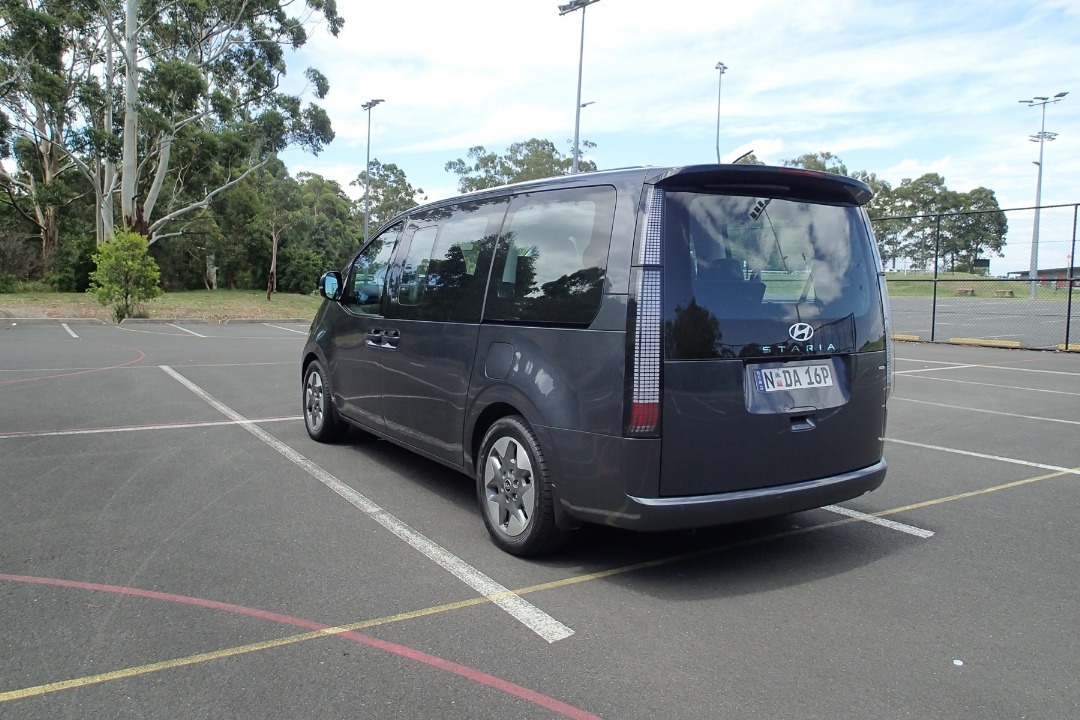
- Length: 5,253mm, width 1,997mm, height 1,990mm, so it’s big but still manageable in most shopping centre car parks, but do check the maximum height before entry, as the sunroof glass won't be a cheap fix.
- Electric sliding doors on both sides and a power tailgate on the Highlander take the hassle out of tight spaces, but plan ahead for the rear door, as it will not stop opening until it strikes something.
- Ground clearance of 186mm means it’s less precious about rough driveways and gravel roads than you might expect.
On the road, the Staria has presence. You sit high, you see everything, and you can spot it easily in a crowded car park. It looks properly modern now - and unlike yet another anonymous big SUV, it tells everyone exactly what it’s for.
Interior & Technology
Step inside and you immediately see why people movers still make sense.
Space & Seating
There’s genuinely usable room for eight adults. Not “as long as the trip is under 20 minutes” usable - I mean proper, stretch‑out, long‑drive space. The Staria’s van‑based footprint and long 3,273mm wheelbase give it a flat, open cabin that SUVs can’t match.
- Three rows, all with proper seating. The third row isn’t a punishment row - adults can sit there without folding themselves in half.
- With all three rows up, you still get around 831L of boot space, which is enough for a family holiday’s worth of gear.
- Fold or slide the back rows to expand to around 1,300L for bulkier loads.
.jpg?alt=media&token=7ed41770-120f-4fb7-b2bf-653853e28b08)
Cabin Layout & Storage
The interior is super functional in everyday use. Hyundai has clearly thought about families and people who live in their vehicles:
- Ventilated Wireless charging pad up front for your phone. Brilliant for keeping your phone cool whilst connected wirelessly to Apple CarPlay or Android Auto and charging your phone.
- Multiple USB‑C ports, so the kids aren’t fighting over a single charging point.
- Loads of storage: big door bins, deep centre-console storage, open shelves, and extra pockets everywhere.
- Cup holders galore across all three rows - coffee, water, juice boxes, and the odd baby bottle all have somewhere to live.
It’s the sort of cabin where, after a week, you keep finding new storage nooks. For a busy family, rideshare or airport shuttle, that stuff matters more than soft‑touch trim on the dash.
.2D%20AWD%20(Entry%20Trim).jpg?alt=media&token=92fcaf0d-0130-42d9-b238-8f6284ea7df8)
Tech & Features
The Highlander is well equipped, as you’d expect at this price point.
- Large central touchscreen with navigation, DAB+ digital radio and Apple CarPlay or Android Auto support
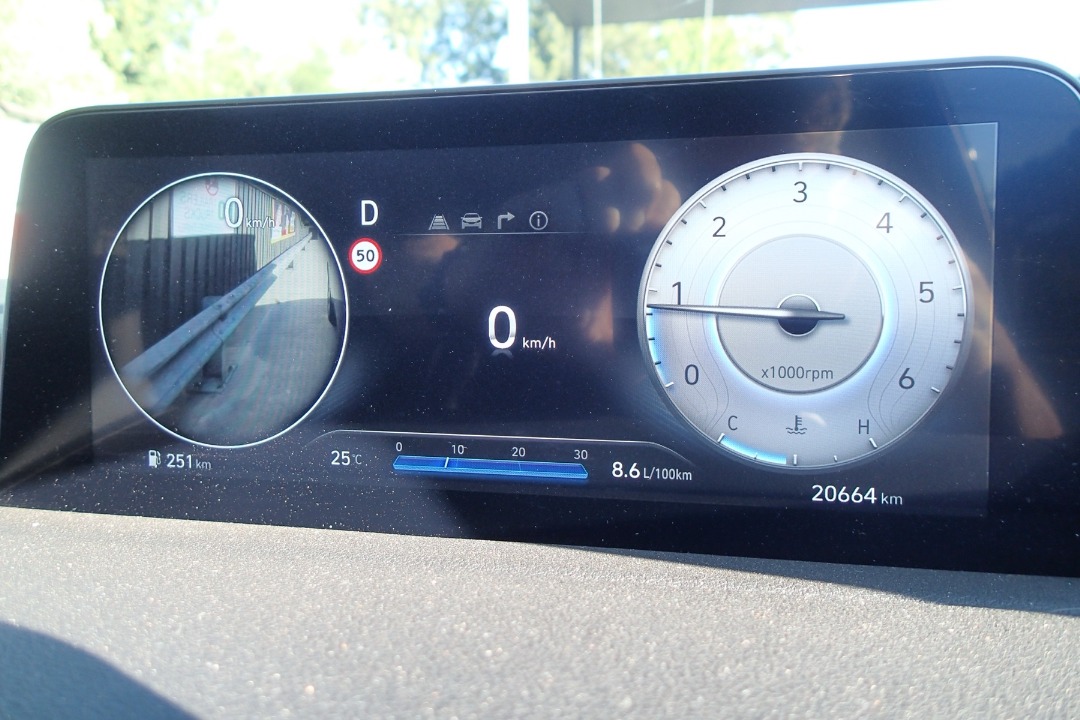
- Digital instrument cluster that’s clear and easy to read.
- Keyless entry and push‑button start.
- Heated and cooled seats and multi‑zone climate control to keep all three rows comfortable.
The tech experience is straightforward rather than flashy. Everything is easy to find and operate, which is exactly what you want when you’re juggling kids, luggage and traffic.
.2D%20AWD.jpg?alt=media&token=a444d9e7-4e5f-4e3f-aeec-cec7462cf85e)
The Big Interior Miss: Front Armrests
One glaring oversight: the front seats desperately need armrests.
On shorter trips, you can live with it. But over a 2,700km fortnight with long highway stints, you really start to miss somewhere to rest your elbows. In a vehicle designed for long‑distance people hauling, not having integrated armrests on the front seats feels like a clear miss.
The seats themselves are comfortable enough, and the driving position is good, but if you’re planning regular interstate hauls, this will bug you.
Performance & Driving Experience
Under the bonnet of this Highlander is Hyundai’s familiar 2.2‑litre turbo‑diesel four‑cylinder, driving all four wheels through an 8‑speed automatic and on‑demand HTRAC AWD system. The HTRAC system on the Staria offers the benefits of an AWD system while maintaining efficient, front-wheel-drive-based handling during normal driving conditions.
Engine & Power
Outputs for the 2.2 diesel are:
- 130kW of power at 3,800rpm.
- 430Nm of torque from just 1,500rpm.
In a vehicle weighing over 2.2 tonnes kerb, that means the diesel can feel underpowered at times, especially if you’re loaded to the gunwales, or pointing uphill on a freeway on‑ramp.
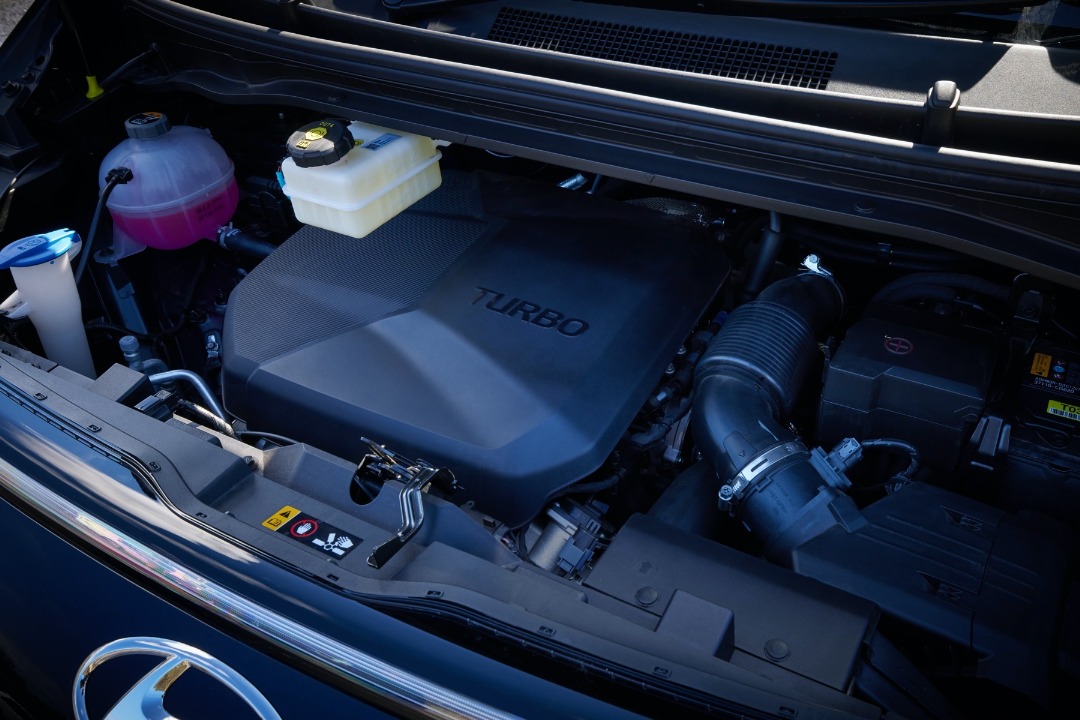
But there’s a big upside: that 430Nm of low‑down torque. Once you’re rolling, the Staria pulls strongly from low revs, making overtaking on country roads and merging into flowing traffic surprisingly relaxed. You could easily tow with the Staria (braked towing capacity: 2,700kg and unbraked: 750kg), but I can't see the point with that big rear door. You'd be forever unhitching your trailer to get to any luggage.
Fuel Economy
Where the diesel really shines is at the bowser.
- Official combined consumption is around 8.2L/100km for the diesel Highlander. Over my 2,702km, I averaged 8.8L/100km.
- On a long open‑road run, with some urban driving mixed in, it’s realistic to see high‑7s to mid‑8s without trying too hard, thanks to that relaxed diesel torque and tall gearing.
Considering the size, weight and boxy shape, that’s very fuel efficient for a proper eight‑seater with AWD. For high‑kilometre families or commercial use, this matters a lot over several years.
On the Road: Ride & Refinement
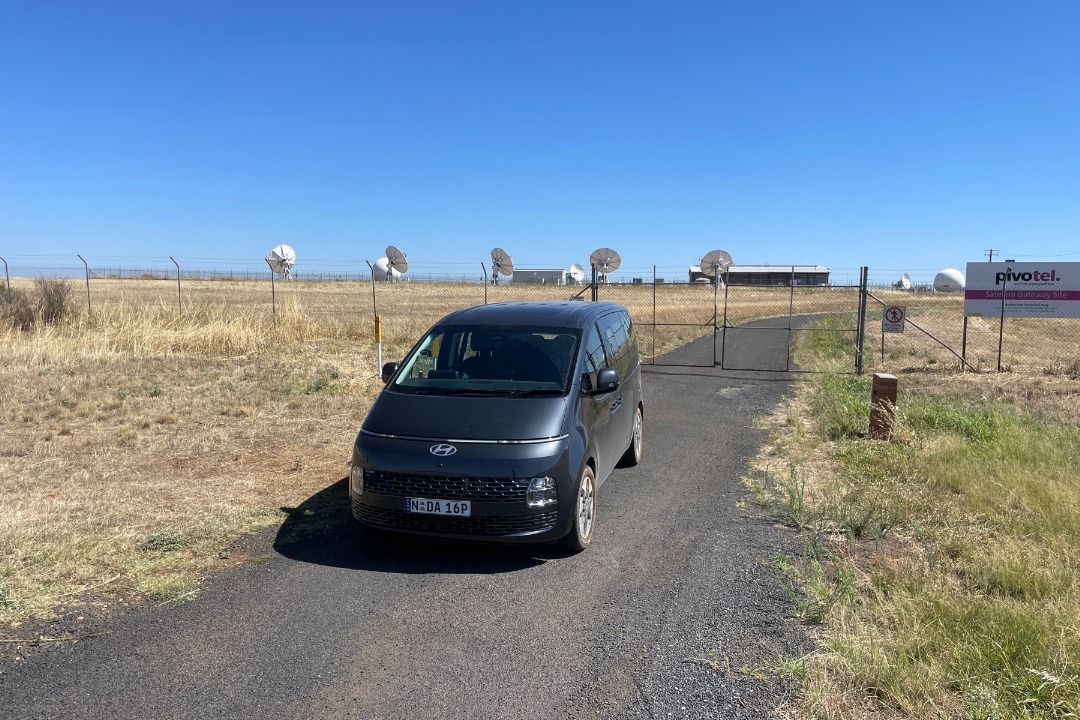
Over 2,700km, the Staria Highlander proved to be a superb cruiser on the open road.
- The ride is comfortable and well‑controlled, even on the 18‑inch wheels.
- Noise levels are well contained - you hear some diesel clatter at low speeds, but at highway pace it settles down nicely.
- The 8‑speed auto shifts smoothly and generally stays in the right gear without hunting.
Around town, the size can feel a bit daunting at first, but the excellent visibility from the driver’s seat makes it easier than expected. The huge glass area, high seating position and generous mirrors give you a commanding view of traffic and pedestrians.
The tightest multi‑storey car parks and old‑school inner‑city lanes will still get your attention, but the light steering, cameras and sensors take a lot of the stress out of it.
AWD & Grip
The diesel Highlander’s AWD system is a strong selling point for Aussie buyers.
It’s not a hardcore off‑roader, but:
- On wet country roads, gravel driveways or muddy fields, AWD adds a welcome layer of stability and traction.
- Ground clearance and shortish overhangs mean it’s happy enough on rougher surfaces and camp sites.
For families who head away to the coast, the snow or the bush, the AWD diesel combination is well‑suited to Australian conditions.
Safety
Safety is a big drawcard with the Staria Highlander.
- It carries a 5‑star ANCAP safety rating (2021) across the range.
- Comes loaded with Hyundai’s latest active safety tech, including:
- Autonomous emergency braking with vulnerable road user detection.
- Lane‑keeping assist and lane departure warning.
- Adaptive cruise control with distance control.
- Blind‑spot monitoring and rear cross‑traffic alert.
- Multi‑angle cameras and parking sensors front and rear.
Passive safety boxes are ticked too, with multiple airbags and strong crash performance. For a vehicle likely to be carrying kids, grandparents and everyone in between, that 5‑star rating and comprehensive assist suite are major selling points.
Shortcomings: Where the Staria Highlander Falls Short
No car is perfect, and the Staria Highlander has a few clear weak spots:
- Underpowered feel when fully loaded
The 2.2 diesel’s 130kW is stretched in a big 8‑seater, especially with a full load of people or a heavy trailer. It’s fine for normal driving, but anyone expecting brisk acceleration will be disappointed.
- Front seats with no armrests
In a long‑distance people mover, this is a baffling omission. Over a 2,700km trip, the lack of front armrests becomes genuinely annoying and tiring. Thankfully, the new Staria EV and Hybrid come with armrests on the front seats, so I hope the option carries over to the rest of the range.
- Size and parking
At over 5.2m long and nearly 2m wide, it’s a lot of metal. The cameras and sensors help, but squeezing into older city car parks or tight suburban streets still takes care and patience.
- Diesel only for AWD
If you want AWD, you’re locked into the diesel. The 3.5‑litre petrol V6 is available, but it’s front‑wheel drive only and uses more fuel, so many buyers will still be torn between power and efficiency.
None of these are deal‑breakers, but they’re worth knowing upfront so you’re not surprised on the test drive.
Value & Verdict
Pricing for the 2026 Hyundai Staria Highlander sits in the mid‑$70K range driveaway, depending on dealer deals and options. Add 5 years of Servicing to the options, and you're closer to $80K driveaway. It’s not cheap, but you’re getting:
- A genuine 8‑seat people mover with proper space in all three rows.
- AWD diesel with strong torque, excellent real‑world fuel efficiency and 2,700kg towing.
- A 5‑star ANCAP rating, packed with modern safety tech.
- A super functional interior with wireless charging, USB‑C ports, heaps of storage and family‑friendly practicality.
- 5‑year/unlimited‑kilometre warranty and 15,000km/12‑month service intervals.
If you’re simply looking at price per seat, an SUV might tempt you. But if you actually need to use all eight seats regularly, want easy access via sliding doors, and care about long‑distance comfort and fuel economy, the Staria Highlander makes a very strong case.
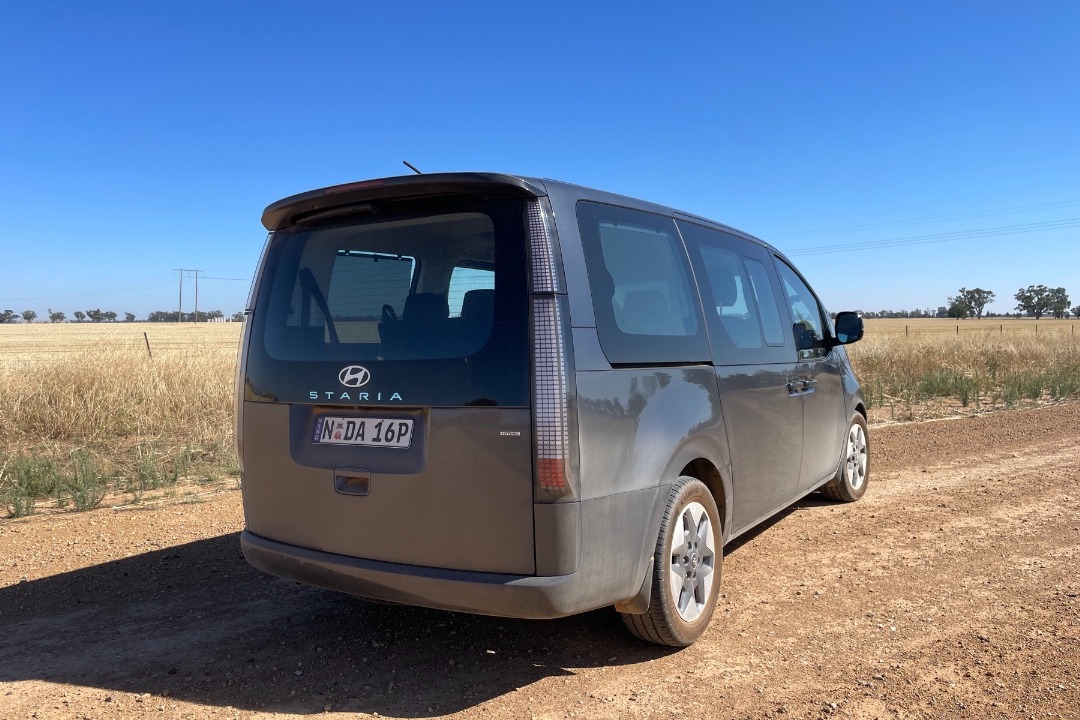
The 2.2 diesel may feel underpowered when pushed, but its torque, efficiency and AWD traction suit Australian conditions and long‑haul family life beautifully. The lack of front armrests and sheer bulk are frustrating, yet the overall package - space, comfort, safety, economy and usability - is hard to ignore.
For big families, airport transfers, rideshare drivers and anyone who genuinely needs to move people first and foremost, the 2026 Hyundai Staria Highlander is one of the last proper people movers standing - and it’s a good one.