Let me be upfront about something before we go any further: this is not a road test. You can't buy the BMW M Concept Neue Klasse, you can't drive it, and BMW has been deliberately coy about the hard numbers. What it represents, though, is far more interesting than another spec sheet - it's a statement of intent about where one of the most revered badges in performance motoring is heading. Those of you shreaking that BMW M has lost their mind and built an EV M3 - fear not. There will be an ICE version of the M3 and with a little luck it might even get a turbo-charged V8 engine, but a straight 6 is more likely.
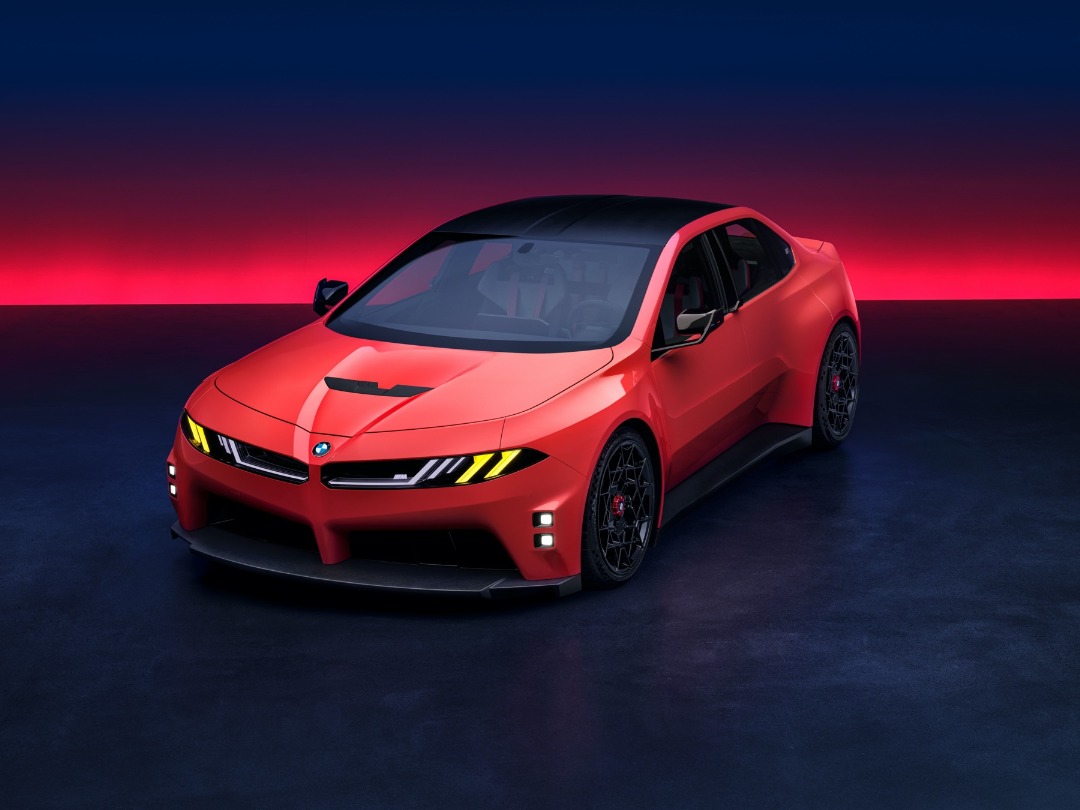
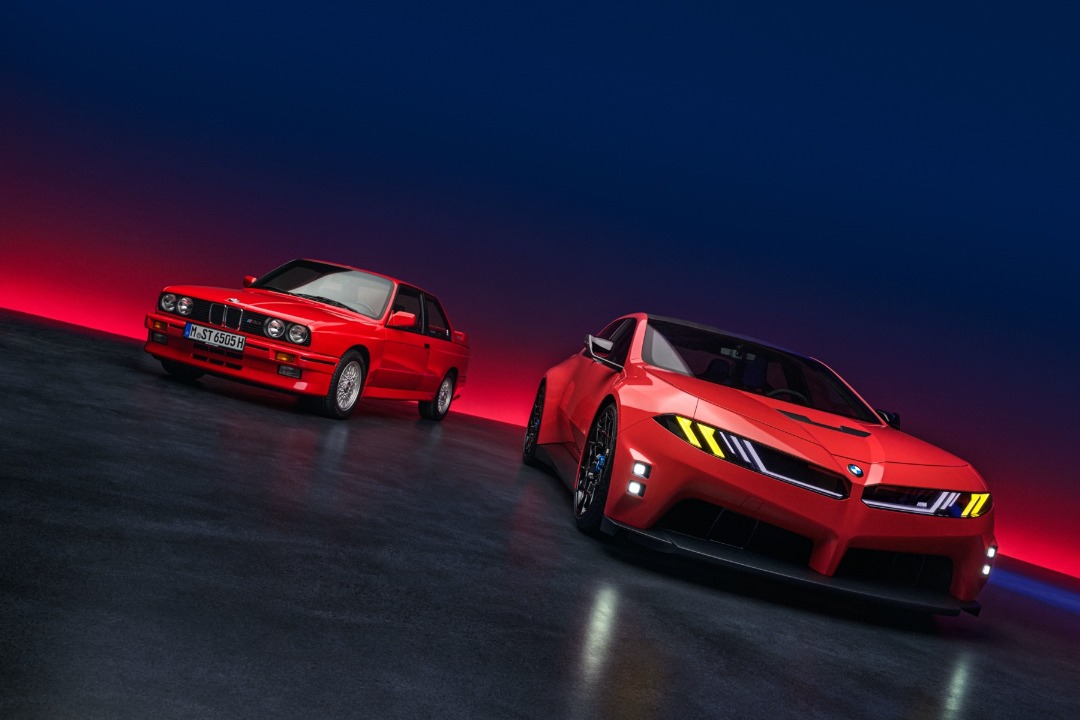
Unveiled to the world at the 2026 24 Hours of Le Mans, this concept is BMW M's declaration that its future is somewhat electrified. It's built on the company's 'new' Neue Klasse platform, the architecture underpinning BMW's next generation of cars, and it carries unmistakable throwbacks to the heritage of the first-generation E30 M3 - the car that started the whole legend. Heavily camouflaged development versions have already been spotted lapping the Nürburgring, so this is more than a design exercise. It's a preview of production reality.
And I'll admit it: I'm not entirely sure how I feel about it. More on that later.
Design & Exterior
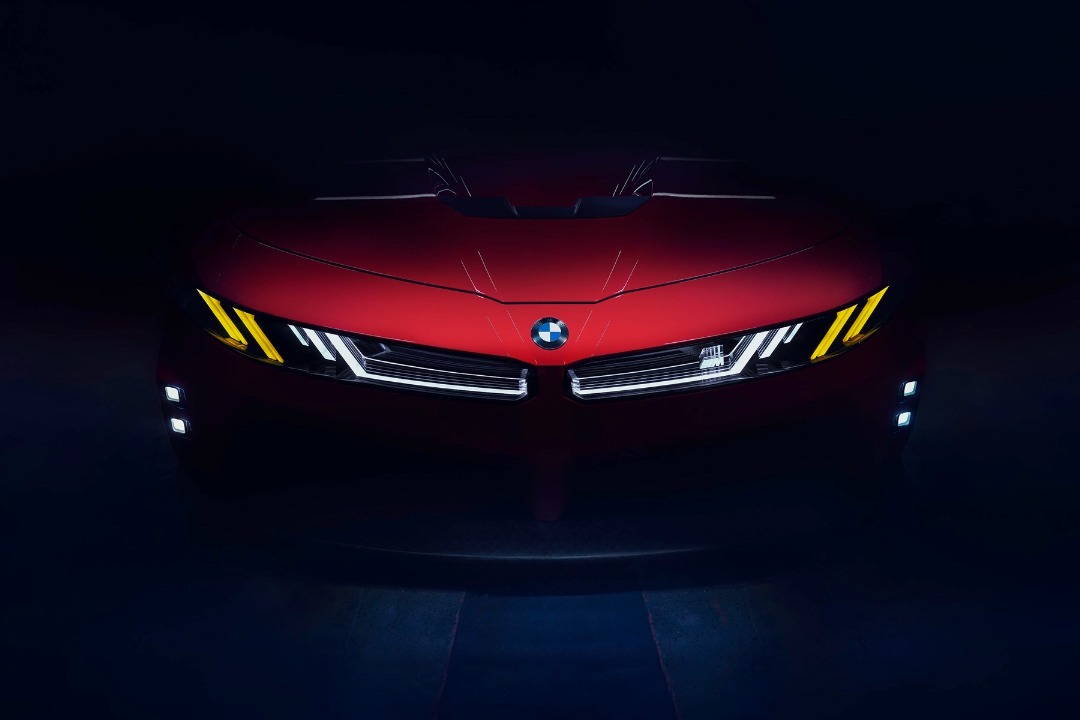
If BMW M has to go electric - and it does - then this is a deeply promising way to look while doing it. The concept showcases an entirely new M design language, and in the metal (or rather, in the images released so far) it's genuinely arresting.
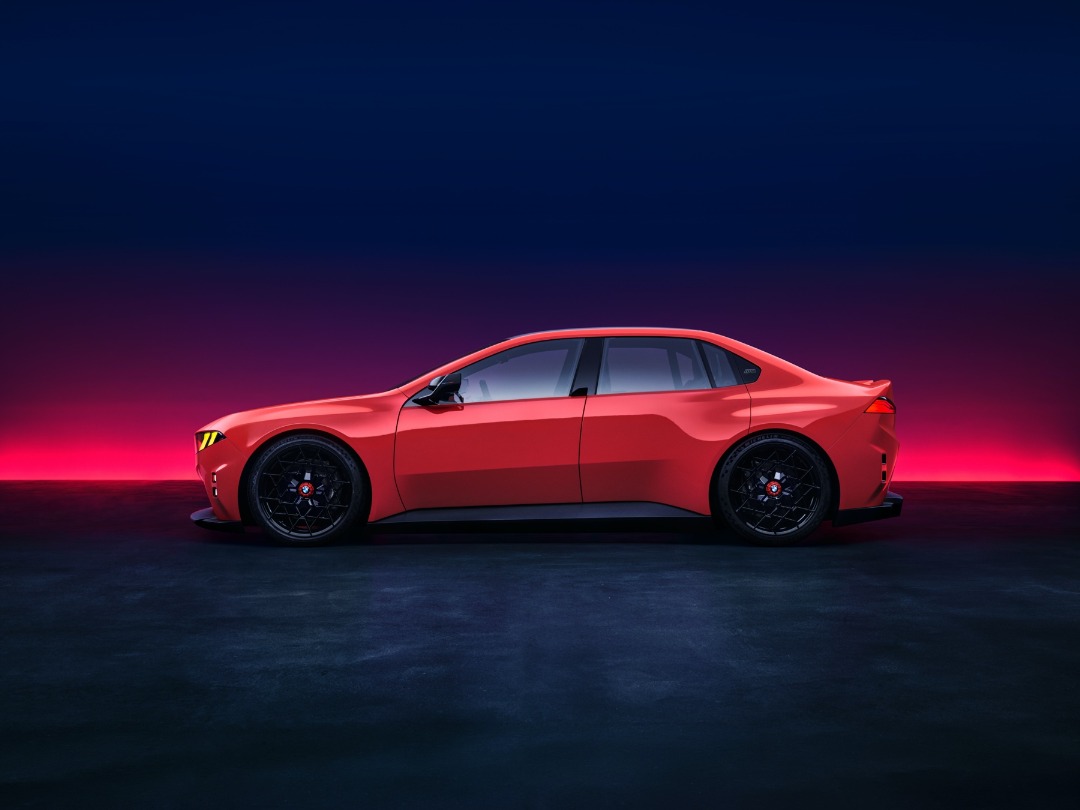
The proportions are pure performance car: powerful, low and wide, with a muscular shoulder section and broad wheel arches that give it real presence. The styling is described by BMW as "form follows function," and the aero detailing backs that up:
- A distinctive V-shaped air outlet carved into the front bonnet to cool the electric drivetrain.
- A forward-facing shark nose and a light signature with a striking depth effect, where the headlights and kidney grille merge into a single unit.
- New M Yellow Lights that reference GT racing cars and the BMW M Hybrid V8 endurance racer - set to become a signature of future M cars.
- A trimaran-style front bumper, inspired by high-speed sailing boats, which also provides structural support for the front splitter.
- Three-dimensional Track Lights in the front and rear aprons, framing a floating diffuser, with a prominent ducktail spoiler for rear downforce.
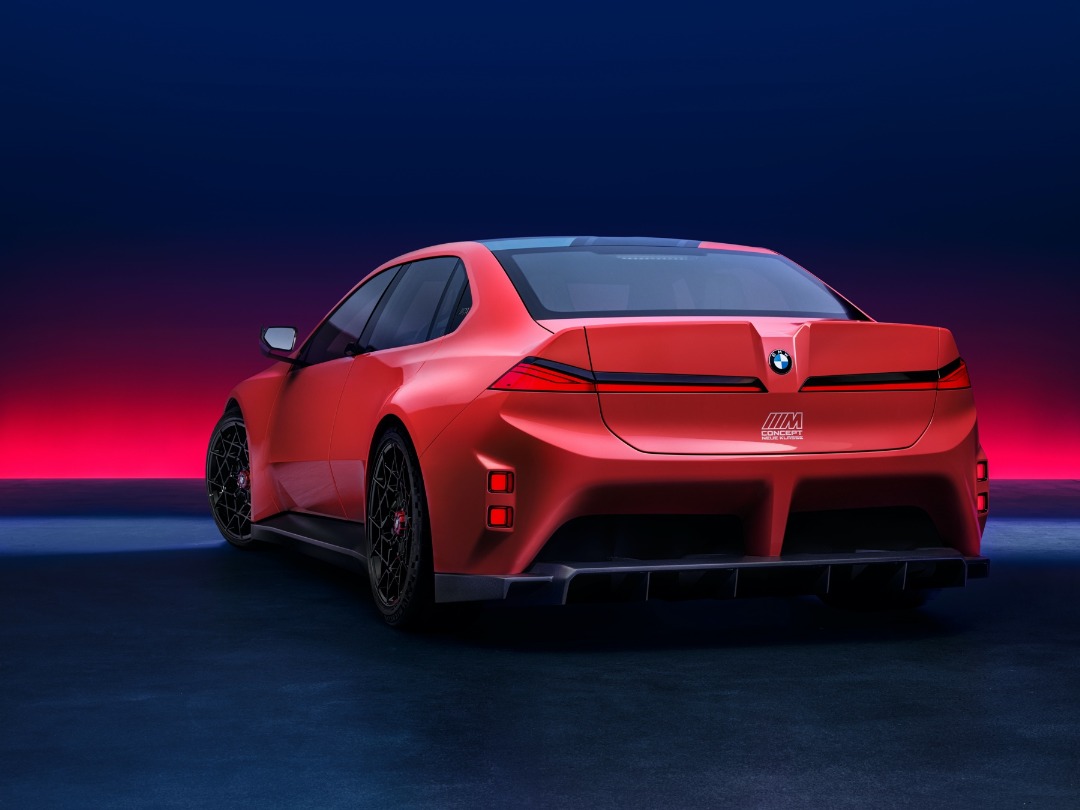
The finishing touch is a newly developed Monza Red metallic paint paired with red-and-blue coded centre-lock wheels, leaning hard into M's racing identity. BMW has also made a point of using natural fibre materials in the splitter, bonnet air outlet and diffuser - and, for the first time, in a refined, branded finish in the roof graphic. It's sustainability worn as a performance badge, not an apology.
Interior & Technology
The cabin is described as reduced and single-mindedly focused on the driving experience, which is exactly what you'd want from an M car of any era. There are four newly developed bucket seats with structural elements made from natural fibre, trimmed in two-tone Bathurst Blue and Berry Red Merino leather - both classic M colours. The red five-point belts are a lovely, motorsport-derived flourish.
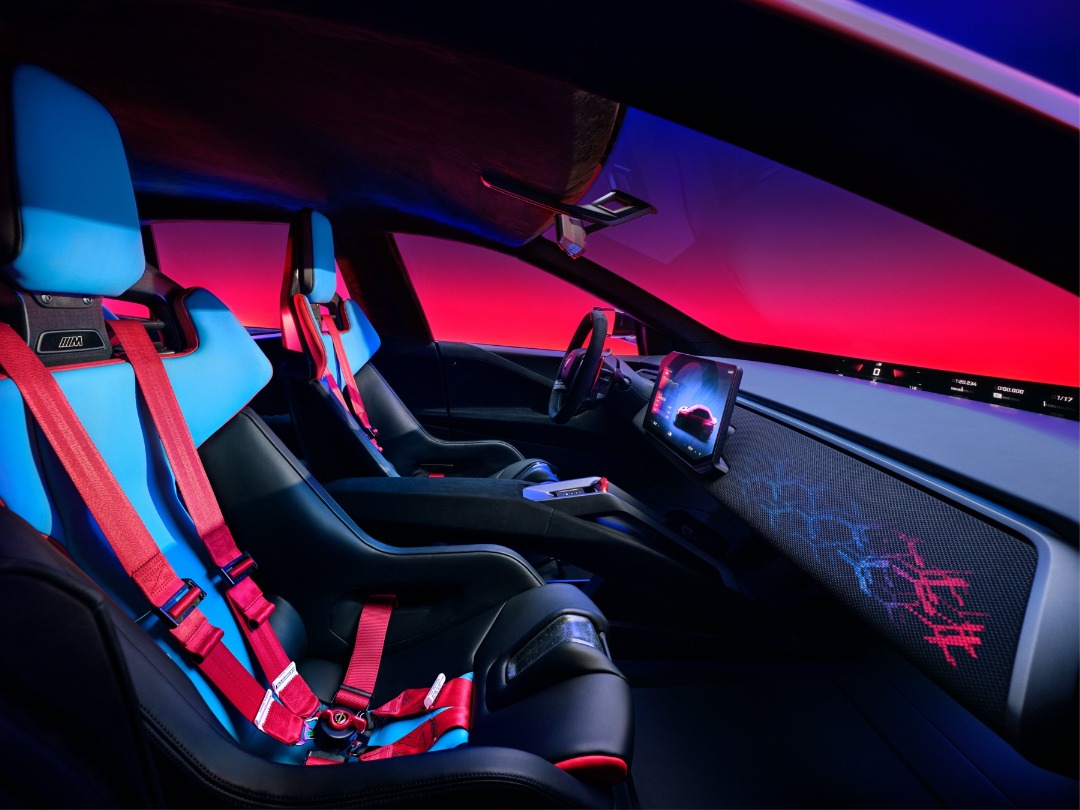
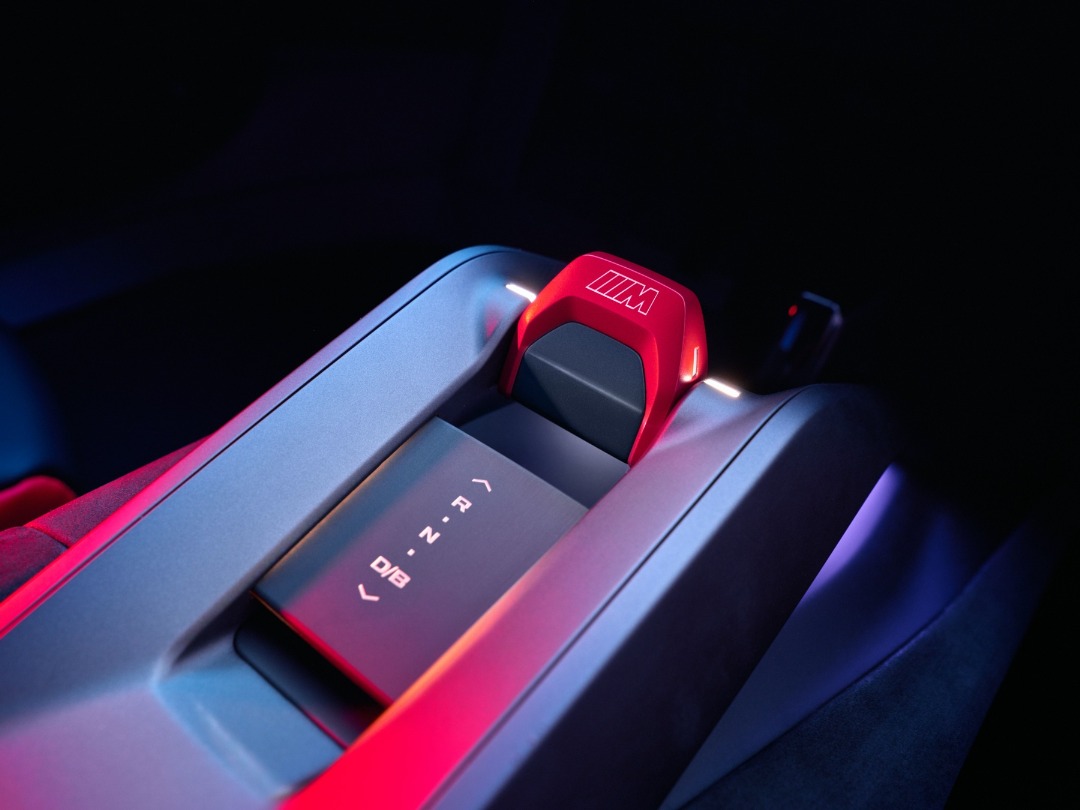
For the first time in an M car, BMW has used high-quality black nubuck leather, here applied to the steering wheel, door panels and roll bar. The floating dashboard is finished in a black knit material with M-specific hexagonal backlighting, and there are red accents on the gear selector, the steering wheel shift paddles and the digital displays.
It all sounds suitably special. The honest caveat, of course, is that concept-car interiors are exercises in aspiration. How much of this survives into the production car - the materials, the seat count, the theatrical detailing - remains to be seen. Concept cabins are notorious for being watered down on the road to the showroom.
Performance & Driving Experience
Here's where the information thins out, and where the most interesting questions live. BMW has confirmed the broad strokes of the drivetrain but held back the headline figures, so I won't invent them.
What we do know is genuinely impressive on paper. The concept uses the new BMW M eDrive system, built on the Neue Klasse's Gen6 technology and developed specifically for all-electric M cars. The key elements:
- Four electric motors - one at each wheel - enabling true wheel-specific torque control.
- BMW M Dynamic Performance Control, the central control software, running on a high-performance computer BMW calls the Heart of Joy.
- Integrated, wheel-by-wheel control of both drive and braking, which BMW says unlocks new potential for both dynamics and safety, with high recuperation and optimal traction right up to the limit.
- 800-volt architecture paired with a high-voltage battery of more than 100kWh, structurally integrated with the front and rear axles to lower the centre of gravity and stiffen the chassis.
- BMW M-specific sixth-generation cylindrical cells optimised for high output during both acceleration and charging.
On paper, this is a recipe for a devastatingly capable machine. Four-motor torque vectoring is the holy grail of handling control, and integrating the battery into the structure is exactly the kind of thinking that makes a heavy EV handle like something lighter.
But here's my honest reservation, and it's a big one. The sound and feel of the engine, drivetrain and tyres are core to BMW M DNA. A straight-six screaming towards its redline, the mechanical drama of a twin-clutch gearbox, the way a combustion M car communicates through every surface - that's a huge part of what makes an M car an M car. No amount of clever software or synthesised sound can fully replicate that visceral, mechanical connection. Until I've driven a production version, I genuinely don't know whether BMW can transplant the soul along with the performance. The numbers may well be staggering. Whether it stirs the same feeling is the question that matters.
Where the Concept Raises Questions
- No hard performance figures, pricing or timing have been confirmed - this remains a styling and technology preview.
- Concept-to-production reality: expect the dramatic interior and some design flourishes to be softened for the showroom.
- The soul question: whether an all-electric M car can deliver the emotional, sensory connection that defines the badge is the great unknown, and won't be answered until we drive it.
Final Take
The BMW M Concept Neue Klasse is a confident, striking and technically ambitious vision of where M is headed. The design is fabulous, the heritage cues to the E30 M3 are genuinely moving for anyone who loves the brand, and the four-motor, 800-volt, 100kWh-plus engineering promises performance that could rewrite what we expect from a fast BMW.
BMW M's guiding principle is "Born on the racetrack. Made for the streets," and on the evidence of this concept and those Nürburgring test laps, the racetrack part is in safe hands. The streets part - the feeling, the sound, the soul - is the bit I'm reserving judgement on. I want to believe. I just need to drive it first.